Ordered by 15:00, shipped the same day! Free shipping starting CHF.- 80!



 B2b registration
  Client login
Medical cannabis is more accessible in Switzerland today than it was just a few years ago. When this article was first published in December 2020, the National Council had just approved a legislative amendment. At that time, healthcare professionals still needed a special exemption from the Federal Office of Public Health if they wanted to prescribe cannabis-based medicines.
The Swiss Parliament lifted this ban as of August 1, 2022. Since then, treating professionals have been deciding together with the individuals concerned whether cannabis therapy is an option. Fortunately, an exemption from the Federal Office of Public Health (FOPH) is no longer required.
Nevertheless, the title from back then—“Cannabis Is a Remedy, Period”—no longer applies today. Medical cannabis can help with certain conditions, but it does not work the same way for everyone. Furthermore, the evidence, side effects, and benefits vary significantly depending on the condition, the product, and the dosage.
This updated article explains the current regulations governing medical cannabis in Switzerland, what new studies are available, and why an objective assessment is more important than euphoria or rejection.
What does medical cannabis mean in Switzerland?
The term “medical cannabis” encompasses various cannabis-based medications. These include approved over-the-counter medications, cannabis flowers, and so-called compounded medications.
In a compounding prescription, a pharmacy prepares a medication individually for a specific person based on a doctor’s prescription. Depending on the prescription, the preparation contains THC, CBD, or a combination of both cannabinoids.
The key factor is the product’s intended medical use. Not every product derived from the hemp plant is automatically considered a medicine. Over-the-counter CBD products therefore do not fall into the same category as medically prescribed cannabis preparations.
If you’d like to better understand the biological principles behind THC, CBD, and the body’s own cannabinoids, you’ll find a detailed explanation in our article on the endocannabinoid system.
What changed on August 1, 2022?
Before the law was amended, healthcare professionals had to apply to the FOPH for an exemption for each cannabis therapy. This process took time and made access more difficult.
As of August 1, 2022, healthcare professionals are authorized to prescribe cannabis-based medications directly. They bear medical responsibility for this and, among other things, assess:
- What are the symptoms?
- What treatments have been used so far?
- Which product is right for this situation?
- What are the risks and interactions?
- How is the course of treatment progressing?
However, the new regulation did not legalize the private cultivation of THC-containing cannabis. Swissmedic continues to regulate the cultivation, production, processing, and trade of medical cannabis. Companies must obtain the appropriate operating and cultivation permits to do so.
The FOPH will also collect data on treatments through 2029. Through this effort, the federal government aims to better understand prescribing practices and gain additional insights into efficacy and safety.
For which conditions is cannabis a potential treatment option?
In Swiss medical practice, healthcare professionals primarily use cannabis-based medications to treat certain chronic conditions. The FOPH specifically mentions:
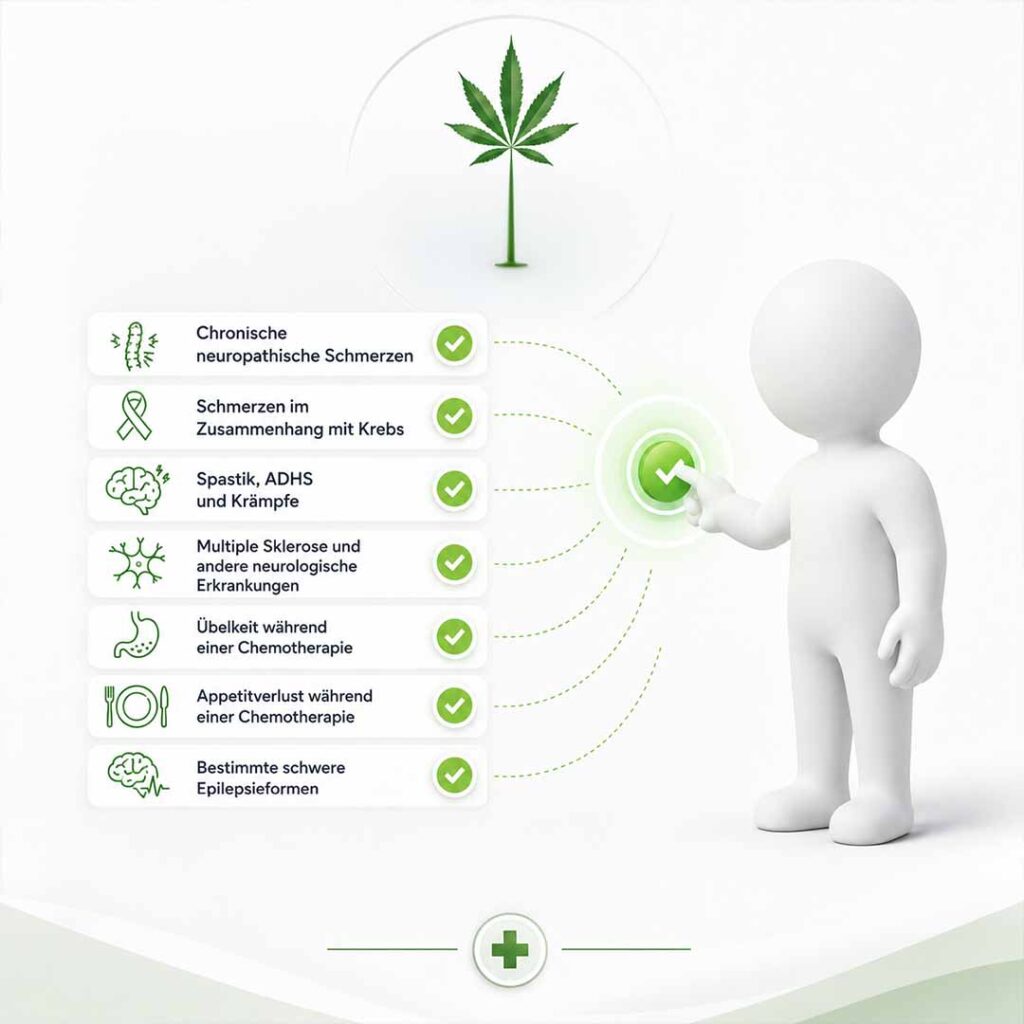
- chronic neuropathic pain
- Pain Associated with Cancer
- Spasticity, ADHD, and seizures associated with multiple sclerosis or other neurological disorders
- Nausea and Loss of Appetite During Chemotherapy
- There are also approved CBD medications for certain severe forms of epilepsy. Compared to many other areas of application, there is a relatively clear scientific basis for their use.
However, this list does not mean that cannabis is effective for every person affected. Specialists often consider cannabis therapy only when established treatments are not sufficiently effective or cause severe side effects—something we at Herba di Berna find regrettable.
You can find out more about the latest research findings in our article ” Cannabis Studies 2025.”
What does the research say about medical cannabis?
The body of research has evolved since 2020. At the same time, it continues to vary widely depending on the disease.
Researchers are particularly focused on studying cannabis-based medications for chronic pain. A systematic review updated in 2025 reached a sobering conclusion: Certain THC-CBD formulations can, on average, slightly reduce pain. At the same time, side effects such as dizziness, fatigue, and nausea occur more frequently.
A large Phase 3 study conducted in 2025 investigated a standardized full-spectrum cannabis extract for chronic back pain. A total of 820 adults participated. After twelve weeks, pain intensity decreased more significantly in the cannabis group than in the placebo group.
However, the average difference between the two groups was only 0.6 points on a scale of 0 to 10. At the same time, 83.3 percent of the treated individuals reported side effects, compared with 67.3 percent in the placebo group. Dizziness, fatigue, nausea, dry mouth, and drowsiness were particularly common.
The result is interesting, but it does not prove that this is a universal pain reliever. A statistically significant difference may be relevant for some individuals, while others may benefit very little or discontinue treatment due to side effects.
New Findings on Mental Illness
Many people also associate medical cannabis with anxiety, sleep problems, depression, or post-traumatic stress. This is precisely where a particularly careful assessment is needed.
A comprehensive review published in 2026 analyzed 54 randomized trials on the use of cannabinoids for mental health disorders and substance use disorders. Overall, the researchers found no convincing evidence of efficacy for most of the disorders studied.
Particularly in the case of anxiety disorders, psychotic disorders, post-traumatic stress disorder, and opioid dependence, the evidence was insufficient to recommend cannabinoids as an effective standard treatment.
This does not mean that individuals do not experience subjective improvement. However, personal experiences are not sufficient to reliably demonstrate medical efficacy. This is why, especially when it comes to mental health issues, a careful diagnosis and professional support are essential.
For a more in-depth discussion of mental health risks, see our article “Cannabis and Psychosis.”
What roles do THC and CBD play?
THC and CBD are among the best-known cannabinoids in the hemp plant. Nevertheless, they differ significantly.
THC has an intoxicating effect. Among other things, it can affect pain perception, muscle tension, appetite, and nausea. At the same time, THC can cause dizziness, fatigue, heart palpitations, difficulty concentrating, anxiety, or changes in perception.
CBD does not cause the typical “high.” Medical professionals use pharmaceutical-grade CBD, for example, to treat certain forms of epilepsy that are difficult to manage. Researchers are also investigating CBD in other areas, but many potential uses are not yet considered to be sufficiently substantiated.
CBD can also cause side effects. These include fatigue, digestive issues, and interactions with other medications. At higher medical doses, liver function tests may also be affected.
That is why it is not just the name of the cannabinoid that matters. Composition, dosage, form of administration, concomitant medications, and individual factors significantly influence the benefits.
What are the known side effects and risks?
Just because a substance is used for medical purposes does not automatically mean it is risk-free. Cannabis-based medications containing THC can cause the following symptoms, among others:
- Dizziness
- Tiredness
- Dry mouth
- Nausea
- Heart palpitations
- Concentration problems
- Anxiety or restlessness
- Changes in Perception
Special caution is warranted in cases of a history of psychosis, substance use disorders, pregnancy, breastfeeding, and an increased risk of falls. Older adults and individuals taking multiple medications also require careful monitoring.
That is why healthcare professionals do not just check whether the symptoms are subsiding. They also assess the patient’s ability to drive, concentration, sleep, ability to function in daily life, and quality of life.
If the side effects outweigh the potential benefits, healthcare professionals and patients should work together to adjust or discontinue the treatment.
Does health insurance cover medical cannabis?
The simplified prescribing process did not automatically lead to widespread coverage. Mandatory health insurance currently covers cannabis-based medications only in exceptional cases.
As a rule, prior authorization is required. For this, several conditions must be met. Health insurance companies often require, among other things:
- a serious or chronic illness
- missing or exhausted treatment options
- a clear medical justification
- a significant expected therapeutic benefit
The FOP estimates the average monthly treatment costs at about 300 to 500 francs. The exact amount depends on the medication, the dosage, and the condition.
For many people, therefore, financial access remains difficult. While the legislative change removed an administrative hurdle, it did not solve the cost problem.
Is it legal to grow medical cannabis yourself?
A doctor’s prescription does not authorize private cultivation for personal use. Anyone who wishes to grow cannabis for medical purposes must obtain the appropriate authorizations from Swissmedic.
Companies need an operating license and, in addition, an individual cultivation license. Production and processing are also subject to clear guidelines.
The legislature’s aim is to ensure quality, traceability, and safety. The private cultivation of THC-containing cannabis remains illegal outside of authorized projects or medical facilities.
Medical cannabis in Switzerland is not the same as over-the-counter CBD
This distinction is particularly important for Herba di Berna.
Medical cannabis is part of a treatment plan supervised by a physician. Specialists select an appropriate medication, pharmacies prepare a compounding formula as needed, and medical authorities monitor the treatment.
Over-the-counter CBD products, on the other hand, are subject to different legal requirements. Depending on their intended use, they may fall under chemical regulations, cosmetics regulations, food regulations, or tobacco product regulations.
They are not automatically considered medicinal products and must not make any claims regarding healing. Herba di Berna products are also not a substitute for medically prescribed cannabis therapy. Use the products exclusively in accordance with their labeling and intended use.
Especially in cases of severe or chronic conditions, self-medication is not a safe alternative to a medical evaluation. On the black market, it is also impossible to verify the purity and THC content of the product, which completely negates any medical benefit.
Why the old title no longer fits
The original title was: “Cannabis Is a Remedy, No Ifs, Ands, or Buts.” In 2020, this statement reflected the excitement over political progress.
Today, however, we have a clearer understanding of just how complex the situation is. Medical cannabis has an established role in certain medical fields. At the same time, its benefits for many conditions remain limited, unclear, or have not yet been sufficiently researched.
In addition, side effects, drug interactions, and psychological risks may occur. For this reason, medical cannabis requires clear indications, controlled formulations, and regular monitoring.
Responsible communication means explaining the benefits without portraying cannabis as a universal solution.
Conclusion: Medical Cannabis in Switzerland: Progress Without False Promises
Medical cannabis has been significantly more accessible in Switzerland since August 2022. Healthcare professionals no longer need a special exemption from the FOPH and can now evaluate and prescribe treatment directly.
Nevertheless, questions remain. Basic health insurance rarely covers the costs. Furthermore, not every medication is equally effective for every condition. Recent studies point to both potential benefits and clear limitations.
Better data is now available, particularly for chronic pain. On average, however, the improvements are often rather small, while side effects occur relatively frequently. For many mental health conditions, there is still a lack of convincing evidence of efficacy.
As a Bern-based company, we would like to contribute to an objective discussion throughout Switzerland. Medical opportunities deserve attention. At the same time, those affected deserve honest information rather than exaggerated promises.
Frequently Asked Questions (FAQ) about Medical Cannabis in Switzerland
How has the legislation on medical cannabis Switzerland changed regarding the FOPH exemption permit?
Since August 1, 2022, medical professionals can directly prescribe treatments involving medical cannabis Switzerland without a special exemption permit from the FOPH. This legal change significantly facilitates patient access to regulated cannabis medicines within a medically supervised therapy.
Why does a medical prescription for treatments with medical cannabis Switzerland not authorize home cultivation?
A medical prescription for therapy with medical cannabis Switzerland does not in any way legitimize patients to cultivate the plants themselves. The legal cultivation of cannabis medicines is strictly regulated and mandatorily requires specific licenses and exemption permits from the Swissmedic authority.
How does health insurance coverage work for therapies involving medical cannabis Switzerland?
Mandatory basic health insurance currently covers the treatment costs for medical cannabis Switzerland only in medically justified exceptional cases. For potential financial coverage, an individual cost approval must generally be obtained in advance from the respective health insurance company.
What is the legal difference between over-the-counter CBD products and medical cannabis Switzerland?
Over-the-counter CBD products do not replace approved medicines, whereas the use of medical cannabis Switzerland is strictly tied to a medically supervised treatment. These therapeutic cannabis products are subject to a completely different legal purpose and the strictest medical quality controls.
For which specific ailments do doctors prescribe therapies with medical cannabis Switzerland?
Medical professionals primarily use targeted treatments with medical cannabis Switzerland for chronic pain, neurological spasticity, chemotherapy-induced nausea, and certain forms of epilepsy. These treatments specifically alleviate accompanying symptoms but do not represent a universal cure for the underlying diseases.
What health risks must be considered during a treatment with medical cannabis Switzerland?
Even with strictly regulated medical cannabis Switzerland, relevant side effects and dangerous interactions with other medications can occur. For this reason, medical professionals must individually and carefully weigh the therapeutic benefits and potential risks for each patient.
List of sources
Federal Office of Public Health: Medical Use of Cannabis
Federal Office of Public Health: FAQs on Cannabis Medicines
Swissmedic: Cannabis Agency and Medical Cannabis Cultivation
Chou et al.: Living Systematic Review on Cannabis and Other Plant-Based Treatments for Chronic Pain, 2025 Update
Karst et al.: Full-Spectrum Cannabis Extract for Chronic Low Back Pain: A Phase 3 Randomized Placebo-Controlled Trial
Wilson et al.: The Efficacy and Safety of Cannabinoids for the Treatment of Mental Disorders and Substance Use Disorders
Swissmedic: Epidyolex with Cannabidiol for Certain Forms of Epilepsy