Ordered by 15:00, shipped the same day! Free shipping starting CHF.- 80!



 B2b registration
  Client login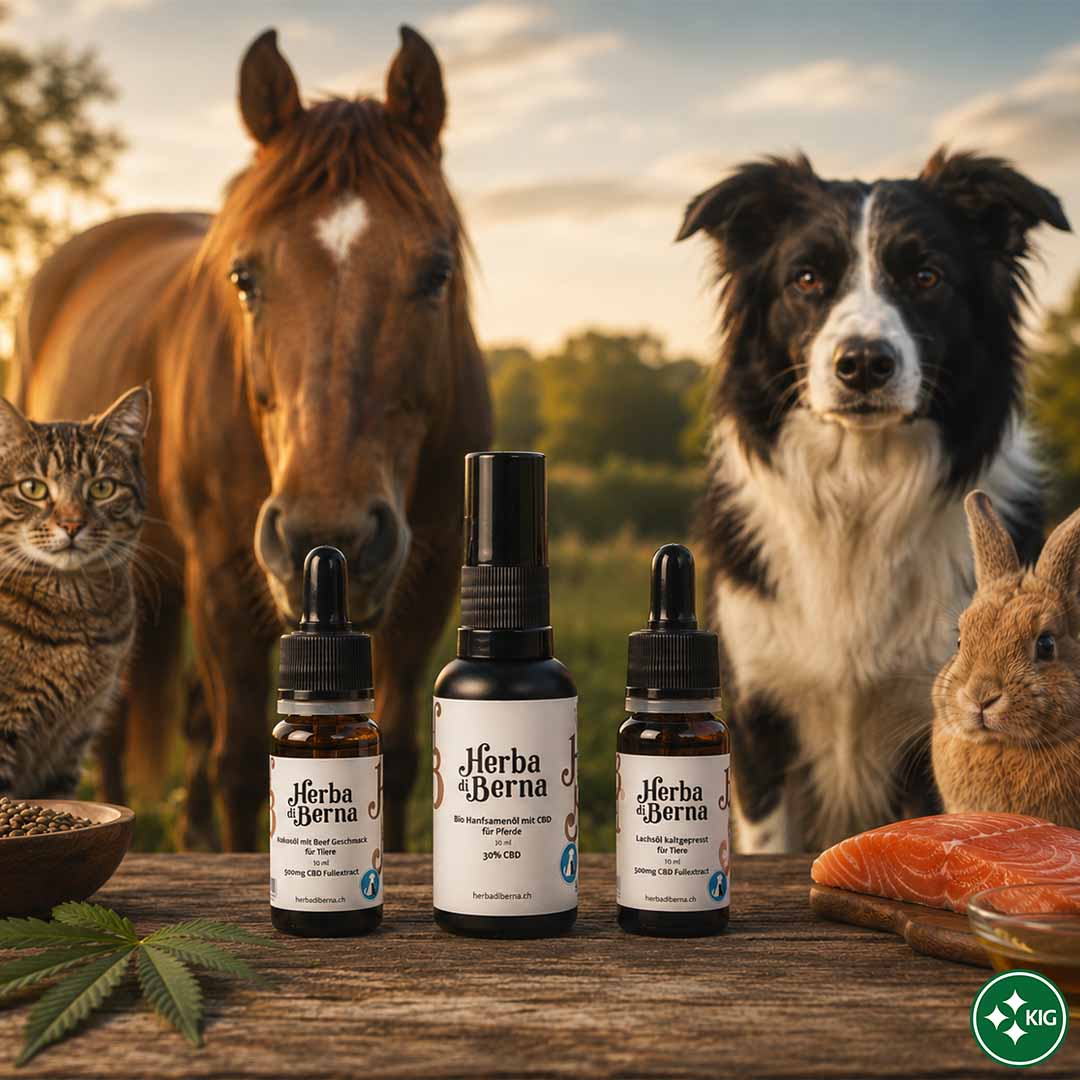
CBD for animals is a topic that is of growing interest to dog owners, cat owners, and horse owners. Many people are interested in hemp products and wonder whether cannabidiol could also be beneficial for pets or horses. The discussion often centers on older animals, stressful situations, mobility, general well-being, or the question of what research has actually shown so far.
At the same time, this is a sensitive issue. Animals are not miniature humans. Dogs, cats, and horses differ significantly in metabolism, body weight, behavior, digestion, and sensitivity. What a human can tolerate well is not necessarily suitable for an animal.
This article explains what CBD means for animals, why THC is particularly problematic, what is known about dogs, cats, and horses, and why a veterinary assessment remains important. The goal is to provide honest guidance for pet owners in Switzerland.
If you’re looking specifically for the right products for your pets, you’ll find our ” CBD for Pets” category at Herba di Berna. We also explain the basics of cannabidiol in our article “What Is CBD?”
In a Nutshell: What Does CBD Mean for Animals?
“CBD for Animals” covers products, research, and testimonials related to cannabidiol in pets and horses. Cannabidiol, or CBD for short, is a non-intoxicating cannabinoid derived from the hemp plant. Unlike THC, CBD does not cause a high.
Animals also have an endocannabinoid system. This endogenous regulatory system is involved in various processes, including pain processing, inflammatory responses, appetite, sleep, mood, and stress management. This is precisely why researchers are showing increasing interest in CBD for dogs, cats, and horses.
Nevertheless, it’s important to note that CBD is not a cure-all. For many applications, large-scale, independent, long-term studies are still lacking. While some findings are promising, they are no substitute for a veterinary diagnosis or professional treatment.
Why Focusing Only on CBD for Dogs Is Too Narrow
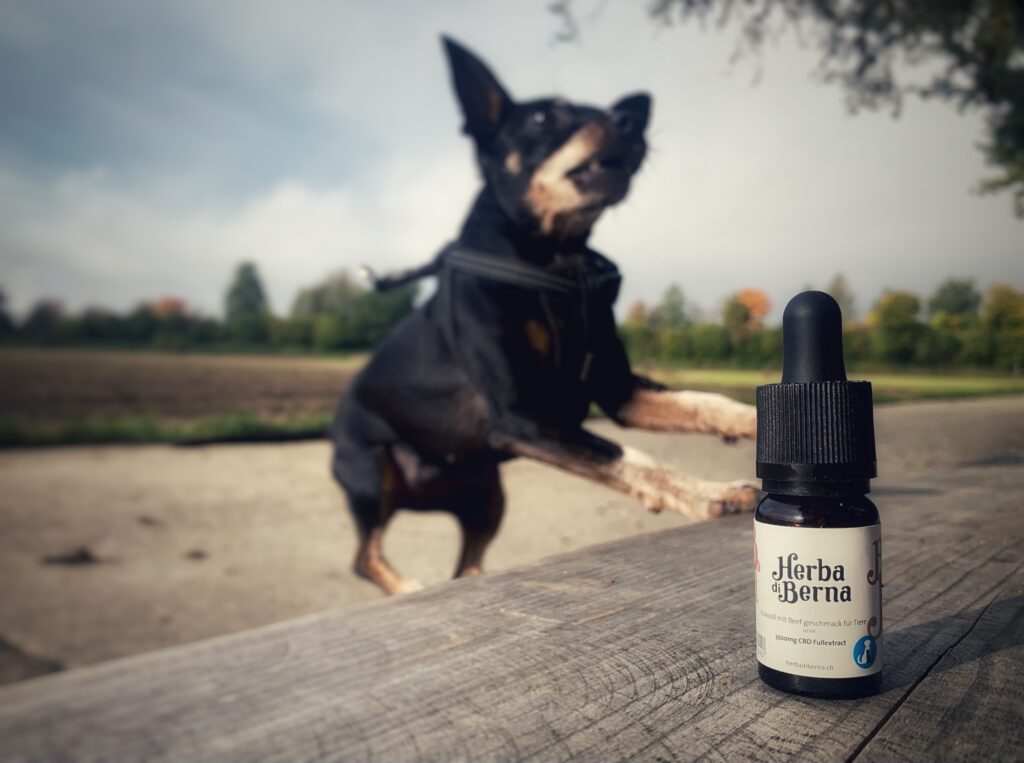
Many older blog posts focus almost exclusively on CBD for dogs. This is understandable, since dogs are particularly common subjects in studies and testimonials. Nevertheless, this perspective is too narrow today.
Cats and horses are also increasingly being discussed in connection with hemp products. We’re receiving more and more inquiries regarding sport horses and the associated travel issues or sensitivity. At the same time, different animal species react differently. Cats, for example, have a different metabolism than dogs. Horses, on the other hand, have their own unique requirements due to digestion, body weight, housing, athletic use, and feed regulations.
That is why “CBD for animals” is the clearer classification. It allows us to mention dogs, cats, and horses without pretending that findings from one animal species can simply be applied to all others.
CBD for Dogs: What Is Being Studied?
Research has focused primarily on dogs to date. Topics such as joint problems, pain behavior, activity, stress, and epilepsy are studied particularly frequently.
For dogs with osteoarthritis, there are studies that describe potential improvements in pain and activity levels. At the same time, review articles remain cautious in their assessment of the evidence. A systematic review concluded that while CBD is generally considered safe for canine osteoarthritis , the evidence regarding its clinical efficacy remains highly uncertain.
Research is also being conducted on the use of CBD in dogs with epilepsy. A few clinical studies suggest that CBD could be a promising complementary approach for treatment-resistant idiopathic epilepsy. However, this does not mean that CBD should be used on its own to treat seizures. Epilepsy should always be managed by a veterinarian.
For dog owners, therefore, the following applies: Research is available, but it is not yet complete. Anyone who suspects their dog is experiencing symptoms should first have a veterinarian determine exactly what is wrong with the dog.
CBD for Cats: Even Less Data Than for Dogs
The body of research on cats is significantly smaller than that on dogs. This is important because cats can be sensitive to many substances. Therefore, findings from studies on dogs cannot automatically be applied to cats.
A recent study examined a CBD/CBDA paste in cats with osteoarthritis. This shows that research in this area is also advancing in cats. At the same time, the available data remains limited, and further studies are needed to better assess safety, tolerability, and potential effects.
For cat owners, this means: remain especially cautious, do not use human products, and always consult your veterinarian if you have any health concerns. Cats, in particular, are sensitive to ingredients, carrier oils, essential oils, or additives that may be less problematic for other animal species.
CBD for Horses: Why This Topic Is Becoming Increasingly Important
Horse owners are also becoming increasingly interested in CBD. This interest often centers on older horses, mobility, stressful situations, changing stables, transport, competition settings, recovery, or general well-being.
At the same time, horses are not just large dogs. They have their own digestive system, a high body weight, specific nutritional needs, and are often closely associated with sports, training, or performance. For this reason, CBD must be used with particular care in horses.
Research on CBD in horses is evolving. Studies are examining, among other things, how cannabidiol and cannabidiolic acid (CBDA) are absorbed and metabolized in the horse’s body. Initial studies suggest that certain CBD- or CBDA-containing supplements were well tolerated by horses in controlled trials. At the same time, it remains unclear what these results mean for everyday use and for which conditions CBD might actually be beneficial.
There are also initial research efforts regarding chronic joint pain. A 2024 study reported potential improvements in pain parameters in adult horses with chronic osteoarthritis following oral administration of CBDA or a CBG/CBD combination. While these findings are interesting, they are not a substitute for a veterinary diagnosis or established treatment.
For horse owners, therefore, CBD is not something to “just try out.” In cases of lameness, pain, stiffness, behavioral changes, or a decline in performance, a veterinary evaluation should always be sought first.
Equestrian Sports, Competitions, and Doping: An Important Additional Point
When it comes to horses, there is one additional factor that hardly plays a role with dogs and cats: the world of sports. Anyone who competes with their horse in tournaments, races, or official competitions must monitor cannabinoids particularly closely.
Depending on the governing body and its rules, CBD, CBDA, or other cannabinoids may be classified as controlled or prohibited substances. Products with an unclear composition can also be problematic, as residues or impurities may lead to abnormal test results.
For sport horses, therefore, the following applies: Before each use, the current rules of the relevant association should be checked. When in doubt, it is better to err on the side of caution than to take a risk. This is especially true for international competitions, races, or association tests.
THC is particularly problematic for animals
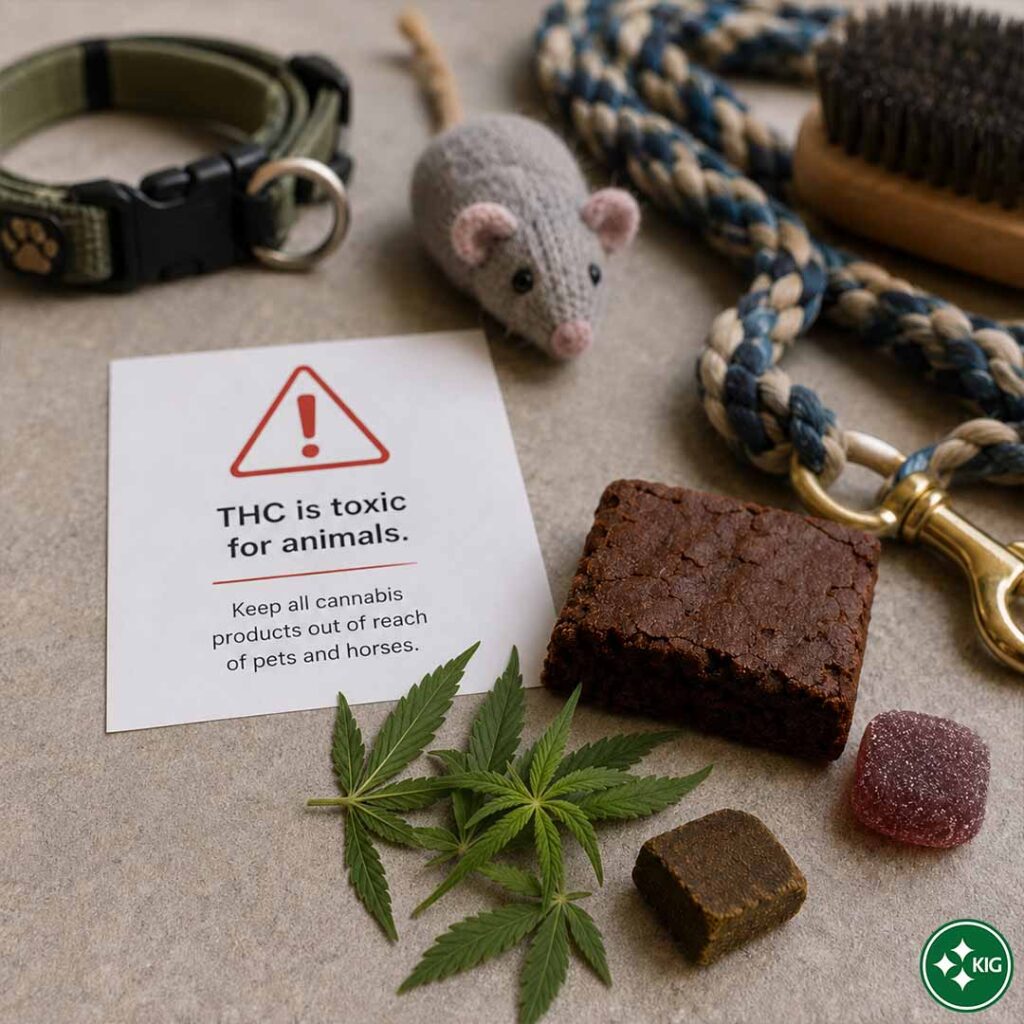
A key consideration with CBD for animals is THC. THC is the psychoactive cannabinoid in the hemp plant and can be problematic for pets and horses. Dogs and cats can be significantly more sensitive to it than humans.
Possible signs of cannabis or THC poisoning may include severe fatigue, coordination problems, tremors, vomiting, restlessness, altered perception, low blood pressure, or unusual behavior. If poisoning is suspected, contact a veterinarian’s office or an emergency service immediately.
Products intended for human use are particularly risky. These include THC-containing cannabis products, edibles, hash, flowers, vapes, and foods containing cannabinoids. Such products should be kept out of reach of animals.
Effects, Testimonials, and Limitations
Many pet owners report positive experiences with CBD. Commonly cited benefits include calmer periods, more relaxed behavior, improved mobility, and a more comfortable daily routine for older animals.
Such testimonials can be valuable, but they are not proof of a medical effect. Animals can behave differently for many reasons. Their daily condition, diet, environment, training, pain, age, stress, or comorbidities all play a role.
That is why we should choose our words carefully. CBD is being studied scientifically in animals, particularly in dogs and, increasingly, in horses as well. However, clear, reliable results are still lacking for many applications. Anyone who suspects a health problem should not experiment with CBD but should first have the animal examined to determine what is wrong.
Side Effects and Tolerability
Even though CBD is not intoxicating, it can cause side effects. Studies and reports cite, among other things, fatigue, gastrointestinal discomfort, changes in appetite, diarrhea, drowsiness, and coordination problems.
Special caution is important for animals with pre-existing conditions, older animals, or animals receiving medication. CBD can affect the metabolism of certain medications, which may lead to interactions.
This is especially true for medications used to treat epilepsy, pain, inflammation, cardiovascular problems, or behavioral issues. A veterinary evaluation is therefore particularly important if an animal is already undergoing treatment.
Buying CBD for Pets: What Should You Look For?
Anyone interested in CBD for pets or horses in general should pay particular attention to quality, transparency, and safety. It is important to have clear product labeling, traceable ingredients, and a responsible approach to legal restrictions.
THC is particularly important. Products that contain THC or have unclear labeling should not be used for animals. Even products intended for humans are not automatically suitable for dogs, cats, or horses.
With horses, there are additional factors to consider. These include body weight, feeding, competition rules, potential doping concerns, and consultation with a veterinarian or equine specialist. Especially with sport horses, it is important to carefully assess before each use whether a product is even suitable.
Claims such as “cures pain,” “stops epilepsy,” or “replaces medication” are unscrupulous. Reputable providers provide information cautiously, transparently, and without any medical guarantees.
At Herba di Berna, you’ll find a dedicated category for CBD for pets. If you’re also looking for accessories for safe storage or everyday use, you’ll find the right items in the CBD Accessories section. We ship our products quickly and discreetly from Bern throughout Switzerland.
When should you definitely take your pet to the vet?
CBD should not replace a medical evaluation. If an animal is in pain, suddenly becomes more lethargic, stops eating, is limping, is having seizures, appears highly stressed, or is behaving unusually, the cause should be determined first.
Veterinary care is especially important in cases of seizures, severe pain, lameness, sudden changes in behavior, vomiting, diarrhea, loss of appetite, or suspected poisoning. Professional advice is also important for older animals with multiple health issues or for animals already taking medication.
In horses, these issues are compounded by lameness, a decline in performance, stiffness, unusual behavior, problems with saddling, feeding issues, or competition rules. Such issues should not be addressed through self-experimentation but rather through a thorough veterinary or professional evaluation.
In such cases, CBD should, at most, be a topic of discussion with your veterinarian. However, diagnosis and treatment should be left to the professionals.
Conclusion: Using CBD for animals requires knowledge, caution, and clear boundaries
CBD for animals is an exciting topic, especially when it comes to dogs, cats, and horses. Research is continuing to advance, particularly in the areas of joint problems, pain management, epilepsy, tolerability, and how cannabinoids are metabolized in animals.
At the same time, the available data remains limited. Many questions regarding long-term safety, interactions, differences among animal species, product quality, and legal classification remain unanswered. That is why this issue requires careful consideration rather than hasty promises.
CBD is not a miracle cure for animals and is not a substitute for veterinary treatment. Especially in cases of illness, medication, pain, seizures, lameness, or unusual behavior, a professional evaluation should always be sought first to determine what is wrong with the animal.
Frequently Asked Questions (FAQ) about CBD for Animals
Why doesn’t CBD for animals work exactly the same in dogs, cats, and horses?
Dogs, cats, and horses differ significantly in their metabolism, body weight, and specific digestive systems. Therefore, scientific findings or dosages from one animal species cannot simply be automatically applied to another.
What does current research say about CBD for animals when used on horses?
Initial studies on horses focus on general tolerability, the absorption of CBD and CBDA in the body, as well as chronic joint issues. However, research in this area is still in its early stages and never replaces a sound veterinary evaluation.
What must I strictly pay attention to when buying CBD for animals?
It is essential to look for transparent labeling, reputable providers, lab-tested compositions, and the absolute avoidance of medical promises. Additionally, if your pet has health issues, you must always seek a professional veterinary assessment first.
What do horse owners need to specifically consider when using CBD for animals?
In addition to their high body weight and specific feeding requirements, potential tournament and doping regulations play a central role for sport horses. The use of cannabinoid products should only occur here after a careful review of the currently applicable association rules.
What scientific studies exist on the use of CBD for animals in dogs?
There are already well-founded studies on dogs that primarily focus on osteoarthritis, pain behavior, and epilepsy. Although the results regarding the use of hemp extracts are very interesting, they are not yet sufficient to make general healing claims.
What is the current data on CBD for animals in cats compared to other pets?
While there are initial studies on cats, the scientific data is significantly sparser than it is for dogs, for example. For this reason, cat owners should be particularly cautious and absolutely never feed their pets conventional hemp products intended for humans.
Can taking CBD for animals cause my pet to get high?
Cannabidiol (CBD) itself has no intoxicating effects and does not make animals high. However, the compound THC is highly dangerous, which is why THC-containing products must be kept strictly out of reach of pets and livestock.
Can I just try out CBD for animals on my own if my pet has health problems?
In cases of pain, lameness, seizures, medication use, or abnormal behavior, a veterinary clinic must be consulted first. Hemp extracts under no circumstances replace a medical diagnosis or professional veterinary treatment.
List of sources:
Swissmedic: Products containing cannabidiol (CBD), overview
Agroscope: Hemp as animal feed
Patikorn et al.: Efficacy and safety of cannabidiol for the treatment of canine osteoarthritis
Mulder et al.: CBD/CBDA paste in cats with osteoarthritis
Thomson et al.: Pharmacokinetics and tolerability of single-dose enteral CBD/CBDA-rich hemp oil in horses
Wang et al.: Chronic oral dosing of cannabidiol and cannabidiolic acid in horses
Aragona et al.: Role of CBDA or CBG/CBD oil in adult horses with chronic osteoarthritis
FEI: 2026 Equine Prohibited Substances List
Rideout et al.: CBD for Pets, Quality Assurance, and Safety Standards