Ordered by 15:00, shipped the same day! Free shipping starting CHF.- 80!



 B2b registration
  Client login
CBD and Parkinson’s disease is a topic of concern for many people living with the condition and their loved ones. Parkinson’s disease is a chronic, progressive disorder of the nervous system. Motor symptoms such as tremors, muscle stiffness, slowed movements, or balance problems are often the most prominent. At the same time, many people also report non-motor symptoms such as sleep disturbances, pain, restlessness, anxiety, mood swings, or a reduced quality of life.
It is precisely in relation to these symptoms that CBD is the subject of scientific debate. Cannabidiol, or CBD for short, is a non-intoxicating cannabinoid found in the hemp plant. It is being studied in connection with the endocannabinoid system, inflammatory processes, sleep, pain management, and emotional balance. Nevertheless, it is important to note that CBD is not a proven treatment for Parkinson’s disease and is not a substitute for medical treatment.
This article provides an objective overview of the current state of research. We explain what is known so far, where the limitations lie, and why medical supervision remains important, especially for people with Parkinson’s disease. As a Bern-based CBD specialty store with customers throughout Switzerland, we aim to make this information accessible without raising false hopes.
In a nutshell: What are Parkinson’s disease and cannabidiol?
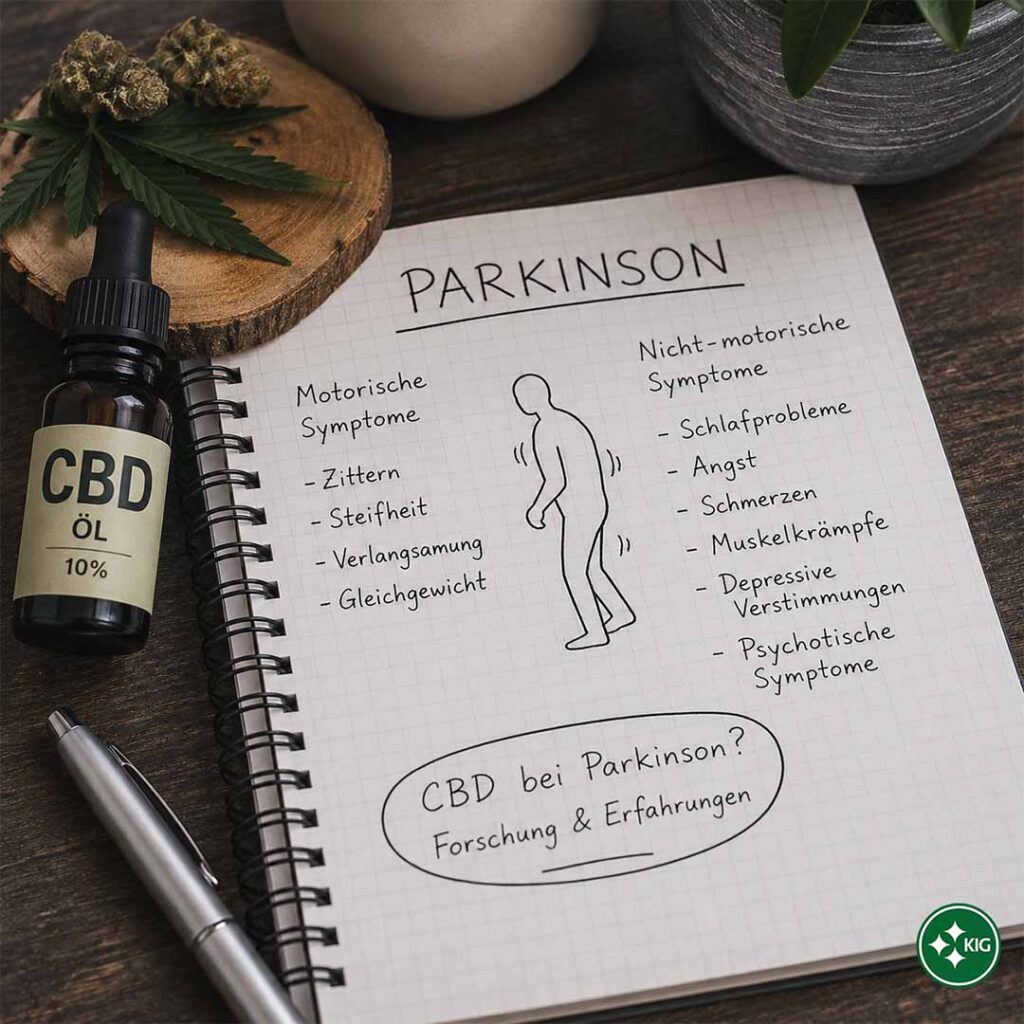
“CBD and Parkinson’s” explores whether cannabidiol could play a role in treating symptoms or associated conditions of Parkinson’s disease. This goes beyond just the well-known movement disorders. Many studies and anecdotal reports focus primarily on non-motor symptoms.
These include, for example, sleep problems, anxiety, pain, muscle cramps, depressive moods, or psychotic symptoms. These symptoms can significantly impact daily life, even if they are less visible than tremors or slowed movement.
However, research has not yet progressed far enough to recommend CBD as a proven treatment for Parkinson’s disease. Recent reviews describe promising preclinical data, but only a few clinical trials in humans. That is precisely why this topic requires an honest assessment.
What is Parkinson’s disease, and why are non-motor symptoms important?
Parkinson’s disease is caused by the progressive loss of certain nerve cells in the brain. Cells that produce the neurotransmitter dopamine are particularly affected. Dopamine plays an important role in movement, coordination, motivation, and various control processes.
The most common symptoms are tremors at rest, muscle stiffness, slowed movements, and unsteady posture. But Parkinson’s is more than just a movement disorder. Many people also experience sleep disturbances, digestive problems, pain, fatigue, anxiety, periods of depression, or cognitive changes.
It is precisely these non-motor symptoms that often have a significant impact on quality of life. That is why researchers and medical professionals are exploring additional ways to better understand these challenges. CBD is being discussed in this context because the endocannabinoid system may be involved in several relevant processes.
CBD for Parkinson’s Disease and the Endocannabinoid System
The endocannabinoid system, or ECS for short, is the body’s own regulatory system. It includes, among other things, cannabinoid receptors, the body’s own cannabinoids, and enzymes that break down and synthesize these substances. The ECS is associated with pain processing, inflammation, sleep, mood, appetite, and nerve signals.
Unlike THC, CBD does not produce an intoxicating effect, nor does it simply bind strongly to the same receptors. Rather, CBD indirectly influences various signaling pathways. This is precisely what makes the compound so intriguing—but also so complex—for researchers.
In the context of Parkinson’s disease, researchers are particularly interested in potential effects on inflammatory processes, oxidative stress, neuroprotection, anxiety, sleep, and quality of life. dsm-firmenich describes CBD in this context as a field of research for diseases of the central nervous system and points to its potential neuroprotective, anti-inflammatory, and antioxidant properties. However, this does not yet constitute a definitive therapeutic conclusion.
If you’d like to better understand the basics, you’ll find a detailed explanation in our article on the endocannabinoid system.
What does the research say about CBD and Parkinson’s disease?
The current body of research on CBD for Parkinson’s disease should be interpreted with caution. A 2024 review article concludes that preclinical studies provide interesting insights. At the same time, clinical trials in humans have so far been rare and often small in scale. Therefore, no definitive conclusions can be drawn regarding its effectiveness.
Parkinson Switzerland’s analysis is particularly helpful. It describes a noticeable discrepancy regarding cannabis and Parkinson’s disease: on the one hand, there are positive case reports and experiences from individual patients; on the other hand, placebo-controlled studies on motor symptoms have so far yielded much more cautious results.
Many sources point out that, particularly when it comes to Parkinson’s disease, important studies are still lacking, and that a diagnosis should only be made under medical supervision. This source is commercial in nature, but it serves as a useful supplement from a market and patient perspective, as long as its claims are not taken too literally.
To approach this topic responsibly, it is important to recognize that CBD for Parkinson’s is a field of research, but not a fully developed treatment approach.
CBD for Motor Symptoms Such as Tremors and Stiffness
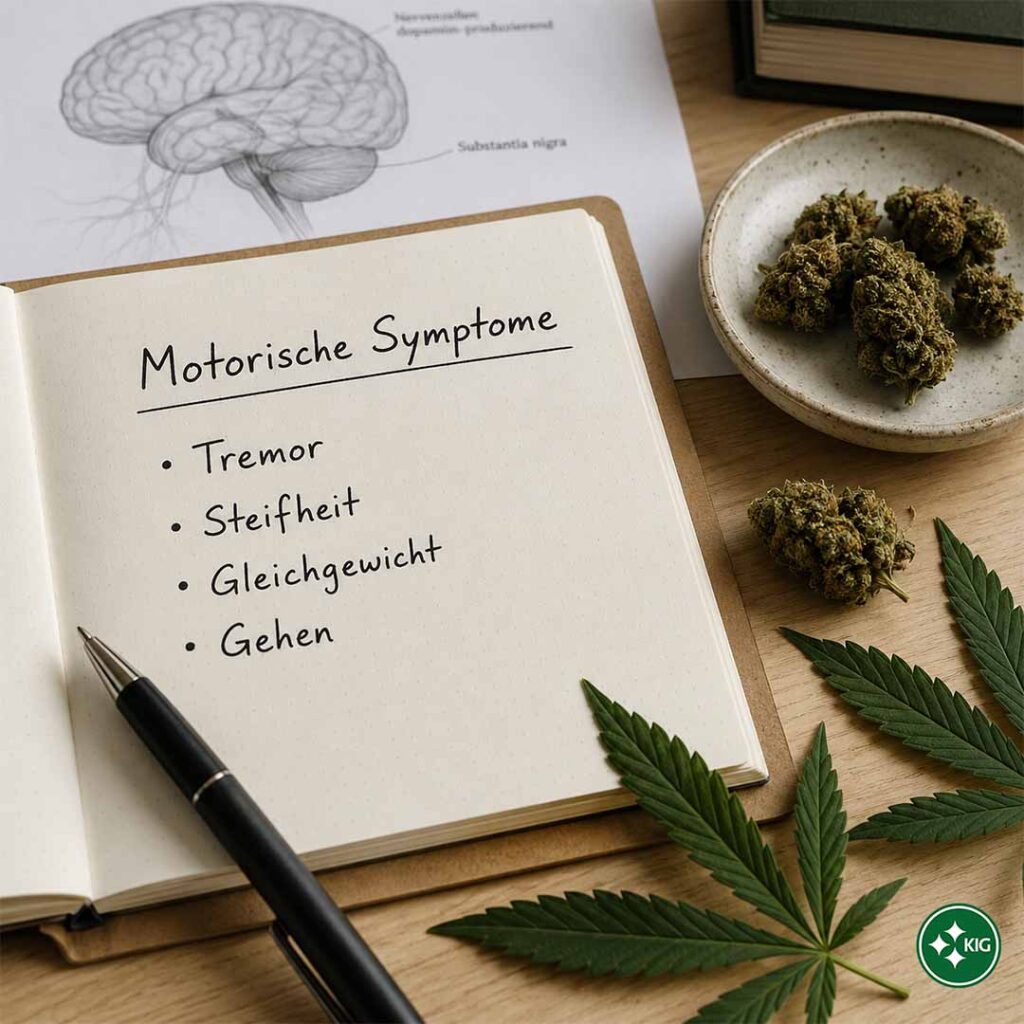
When people think of Parkinson’s disease, many first think of motor symptoms. These include tremors, muscle stiffness, slowed movements, balance problems, and difficulty walking. It is precisely in these areas that expectations for CBD are often high.
However, the evidence available to date is insufficient to claim a clear effect on these primary symptoms. Individual studies and anecdotal reports mention improvements, but the results are not consistent enough to support reliable conclusions. Parkinson Switzerland points out that the American Academy of Neurology does not recognize the therapeutic efficacy of cannabis for tremors and dyskinesias in its guidelines.
This is important to note: CBD should not be presented as a treatment for tremors, stiffness, or mobility issues. Anyone seeking treatment for motor symptoms needs a neurological evaluation and a tailored treatment plan.
CBD for Parkinson’s: Sleep, Anxiety, and Quality of Life
The discussion is more interesting when it comes to non-motor symptoms. Many people with the condition suffer from poor sleep, inner tension, pain, or psychological distress. Such symptoms can significantly affect quality of life.
Parkinson Switzerland explains that, in cases of non-motor symptoms—such as severe sleep-related or pain-related complaints—a temporary trial of cannabis treatment may be considered in individual cases. However, this is contingent upon a careful, individualized assessment of the benefits and risks.
A small case series involving cannabis extract also reported improvements in non-motor symptoms, particularly sleep. At the same time, the study was very small and cannot serve as a general recommendation. Such studies are valuable, but they primarily demonstrate that larger and better-controlled studies are needed.
Therefore, the most accurate statement for our blog is: CBD and cannabis are being studied in relation to Parkinson’s disease, particularly in connection with sleep, anxiety, pain, and quality of life. It is not possible to make a blanket statement about whether this will result in personal benefits.
On the topic of sleep, you might also want to check out our article “CBD and Dreams,” in which we provide a clear overview of CBD, sleep perception, and REM phases.
CBD, Psychosis, and Parkinson’s: A Particularly Sensitive Area
In Parkinson’s disease, psychotic symptoms may occur as the disease progresses or as a result of medication. These include, for example, hallucinations, confusion, or delusions. This is a particularly sensitive area because cannabinoids can also have psychological effects.
Although CBD is being studied for its potential antipsychotic properties, this should not be taken as a treatment recommendation for Parkinson’s-related psychosis. Studies are ongoing, but it is not yet clear whether CBD is well tolerated in cases of Parkinson’s-related psychosis, what dosages would be appropriate in clinical trials, or which patient groups might benefit.
If you experience hallucinations, severe confusion, or noticeable changes in perception, you should always seek medical help. Self-treatment is not a good idea in these cases.
We explain more about the risks associated with cannabis and mental health in our blog post “Cannabis and Psychosis.”
Safety, Drug Interactions, and Medical Supervision
Parkinson’s disease often affects older adults who take multiple medications. That is precisely why caution is especially important. CBD can interact with certain medications because it can affect enzymes involved in the breakdown of drugs.
Possible side effects of cannabinoids may include drowsiness, dizziness, difficulty concentrating, memory problems, changes in blood pressure, or balance issues. In Parkinson’s disease in particular, dizziness or balance issues can increase the risk of falls. Parkinson Switzerland lists hallucinations and orthostatic hypotension, among other things, as potential side effects of cannabis that must be taken into account.
Products containing THC are not automatically suitable for people with Parkinson’s disease. THC can affect perception, circulation, concentration, and mental stability. Anyone who already experiences hallucinations, confusion, or cognitive impairments should be especially cautious.
Therefore, anyone with Parkinson’s who is considering using CBD or cannabis for medical purposes should discuss this with their healthcare provider.
Medical Cannabis in Switzerland: What’s Important?

In Switzerland, the ban on cannabis for medical purposes was lifted in August 2022. This has made it easier to access cannabis-based medications. However, this does not mean that over-the-counter CBD products are automatically considered a treatment for Parkinson’s disease.
Medical cannabis should be administered by a doctor. This involves diagnosis, comorbidities, medications, potential risks, and legal classification. Over-the-counter CBD products available in stores are intended for a different purpose and must not be advertised as medicines.
This distinction is important to Herba di Berna. We provide information on research and hemp-related knowledge. When it comes to medical questions, medical consultation takes precedence.
You can find more information about the legal status of medical cannabis in Switzerland in our article ” Medical Cannabis in Switzerland.”
Conclusion: CBD for Parkinson’s disease remains an exciting but unresolved area of research
CBD for Parkinson’s disease is of scientific interest, particularly for non-motor symptoms such as sleep, anxiety, pain, or quality of life. At the same time, the evidence is not yet strong enough to recommend CBD as a proven treatment.
To date, there is insufficient evidence to support clear claims of efficacy for primary motor symptoms such as tremor, muscle stiffness, or slowed movement. Special caution and medical supervision are also required for psychotic symptoms.
As a Swiss CBD specialty store, we want to provide honest information. The hemp plant offers many exciting avenues for research, but when it comes to neurological conditions in particular, care, expertise, and realistic expectations are essential. Anyone interested in exploring CBD products in general—regardless of their medical needs—will find a selection of CBD flowers and complementary CBD accessories for everyday use at Herba di Berna.
Herba di Bern has its roots in Bern and provides information to customers throughout Switzerland with the goal of sharing knowledge in a way that is understandable, transparent, and responsible. Thanks to fast shipping from Bern, our products reach people in every canton in Switzerland.
Frequently Asked Questions (FAQ) about CBD for Parkinson’s
To what extent can the use of CBD for Parkinson’s have a curative effect?
No, there is absolutely no scientific evidence that CBD for Parkinson’s has a curative effect. Parkinson’s disease is a chronic neurological disorder, and its progression must strictly be managed and treated by medical professionals.
What are the risks and interactions associated with using CBD for Parkinson’s?
The safety of CBD for Parkinson’s strongly depends on the individual’s health status, age, and concurrent use of prescription medications. Because cannabidiol can trigger drug interactions and cause side effects like dizziness or drowsiness, prior medical consultation is absolutely mandatory.
What impact does CBD for Parkinson’s have on non-motor symptoms like sleep problems?
Research is increasingly analyzing CBD for Parkinson’s with regard to improving sleep quality and potentially reducing anxiety. Although initial scientific findings are certainly interesting, the current data is entirely insufficient to make broad medical recommendations.
Why is CBD for Parkinson’s still being intensively investigated in current medical research?
Researchers are investigating CBD for Parkinson’s mainly due to its potential interactions with the endocannabinoid system, which influences inflammatory processes, sleep cycles, and pain processing. Since these areas are highly relevant to the disease’s accompanying symptoms, a potential neuroprotective effect is being thoroughly explored.
What does science say about the effect of CBD for Parkinson’s on the symptom of tremor?
So far, there is insufficient scientific evidence that CBD for Parkinson’s can effectively alleviate the characteristic resting tremor. Although isolated anecdotal reports exist, they are not enough to establish a reliable and safe clinical treatment method.
What must patients consider if they want to try over-the-counter CBD for Parkinson’s?
Over-the-counter hemp products are not approved medications and in no way replace established clinical therapies. Anyone wishing to test CBD for Parkinson’s as a complementary daily measure must strictly discuss this with their treating healthcare professional beforehand.
List of sources
Parkinson Switzerland: Cannabis for Parkinson’s Disease
dsm-firmenich: The Latest Scientific Findings on CBD for CNS Disorders
Rachid et al.: CBD’s potential impact on Parkinson’s disease
Urbi et al.: Effects of Cannabis in Parkinson’s Disease, Systematic Review and Meta-Analysis
Liu et al.: Short-Term Cannabidiol with Delta-9-Tetrahydrocannabinol in Parkinson’s Disease
Ruver-Martins et al.: Low doses of cannabis extract alleviate non-motor symptoms in patients with Parkinson’s disease
Parkinson’s Foundation: Medical Marijuana and Parkinson’s Disease
FOPH: Medical Use of Cannabis in Switzerland
ISRCTN Registry: Cannabidiol for Parkinson’s-related psychosis