Ordered by 15:00, shipped the same day! Free shipping starting CHF.- 80!



 B2b registration
  Client login
CBD during menopause is a topic of growing interest among women who want to learn more about cannabidiol during this time of hormonal change. Common concerns include sleep problems, hot flashes, mood swings, and the question of whether CBD can affect estrogen levels. After all, menopause brings changes not only to hormone levels but often to physical and emotional well-being as well.
But what are the actual benefits of CBD during menopause? What have been people’s experiences with CBD drops, and what does science say about possible links to sleep and cortisol? We’ve reviewed the latest studies and highlight where cannabidiol offers promising avenues for research and where scientific evidence is still lacking.
CBD During Menopause: Can Cannabidiol Really Help?
In short: There is currently insufficient scientific evidence to show whether CBD can alleviate typical menopausal symptoms. While researchers are studying cannabidiol in relation to sleep, stress management, and the endocannabinoid system, there is a lack of convincing clinical studies confirming a specific effect of CBD on menopausal symptoms.
Menopause is not a disease, but a natural stage of life. Nevertheless, the hormonal changes can significantly affect daily life. Some women go through this time with almost no symptoms, while others suffer from hot flashes, sleep disturbances, or mood swings for years.
Experts identify several phases in this process:
- Perimenopause: The years surrounding the last menstrual period. Estrogen and progesterone levels fluctuate, sometimes significantly, which can lead to the first symptoms.
- Menopause: The last menstrual period, which is determined retrospectively after twelve months without menstruation.
- Postmenopause: The subsequent stage of life in which estrogen production remains permanently at a lower level.
The term “climacteric” refers to the entire hormonal transition phase. For this reason, we will use both “menopause” and “menopausal transition” in the following when explaining the relevant concepts.
What role does the endocannabinoid system play during menopause?
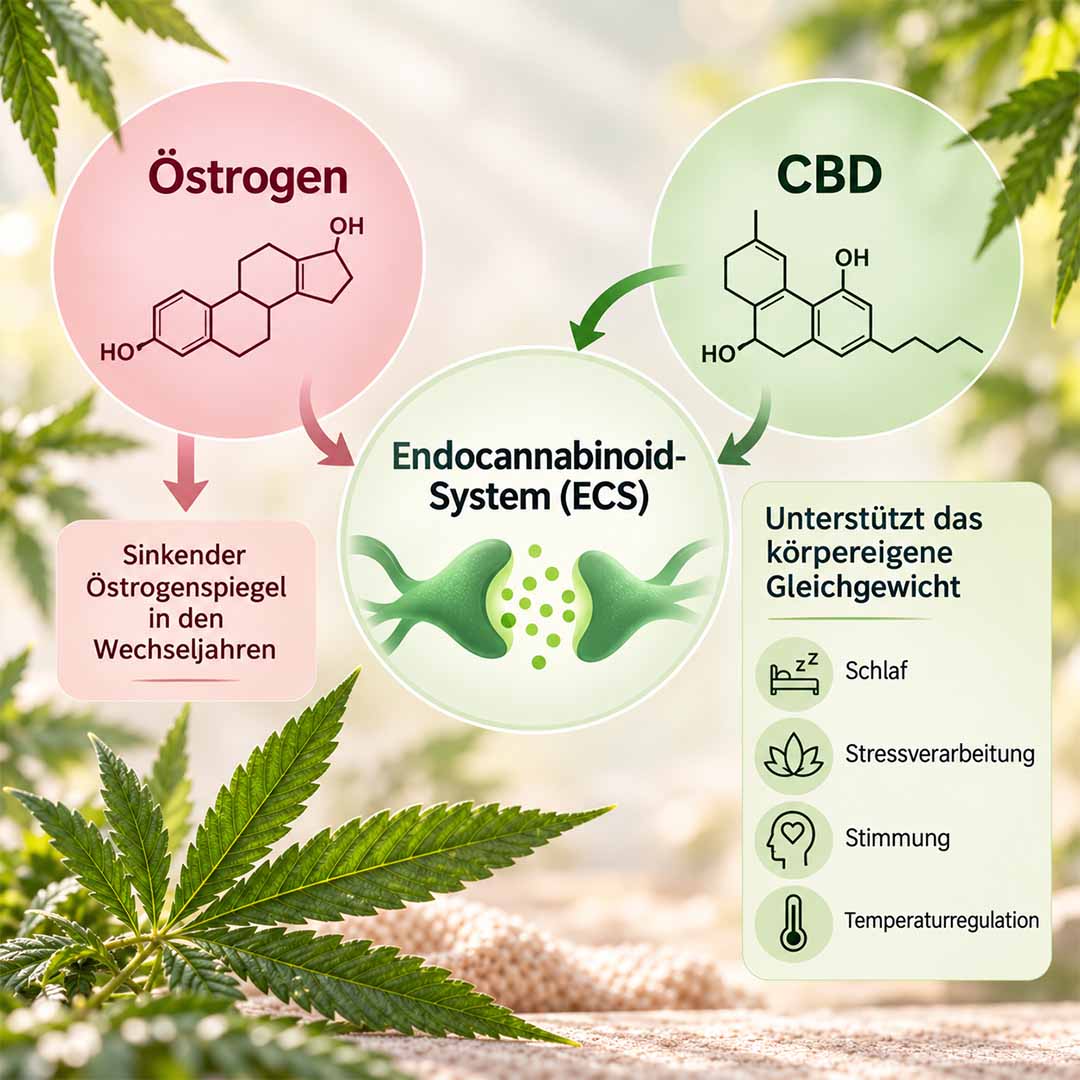
To understand the scientific interest in CBD during menopause, it’s worth taking a look at the body’s endocannabinoid system (ECS). This network consists of cannabinoid receptors, the body’s own neurotransmitters, and enzymes. It is involved in various regulatory processes and is linked, among other things, to sleep, mood, stress response, and pain perception.
The CB1 and CB2 receptors, as well as the endocannabinoids anandamide and 2-AG, are particularly well known. They are part of a complex signaling system found both in the nervous system and in other parts of the body.
What do estrogen and anandamide have to do with each other?
A 2021 scientific review by Santoro and colleagues describes various interactions between estrogen and the endocannabinoid system. For example, sex hormones can influence, among other things, the activity of certain cannabinoid receptors and the metabolism of the body’s own endocannabinoids.
The enzyme FAAH, for example, is involved in the breakdown of anandamide. However, these biological processes are complex. Therefore, a decline in estrogen levels does not automatically imply a specific change in anandamide concentration or a menopausal symptom caused by it.
Equally important is the distinction between biological research and clinical effects: CBD does not replace estrogen, and there is no evidence that it compensates for a hormonal deficiency. Rather, the findings to date explain why the interaction between cannabinoids and sex hormones is scientifically interesting. Incidentally, hormonal changes also play a role during the menstrual cycle; you can learn more about this in our article on CBD for PMS and menstrual cramps.
What do scientific studies say about cannabis during menopause?
Research to date on cannabinoids and menopause has yielded interesting findings, but has not yet produced sufficiently substantiated treatment recommendations. It is particularly important to distinguish between CBD, THC, and cannabis products, which may contain both active ingredients.
As early as 2021, Prof. Dr. med. Petra Stute of Inselspital Bern was investigating the use of cannabis for the treatment of menopausal syndrome. Her work was based on a systematic review in which, out of 564 identified publications, only three studies met the inclusion criteria. Given this limited data, she did not recommend cannabis or CBD for the treatment of menopausal symptoms. This does not mean that the research is complete. However, initial biological findings and personal experiences should not be confused with a clinically proven effect.
CBD and Menopause: What Do Women Report in Studies?
Anyone looking for experiences with CBD during menopause will find numerous personal accounts. These often focus on sleep problems, inner tension, or general well-being. Two scientific surveys provide interesting insights into the use of cannabis products during perimenopause and postmenopause.
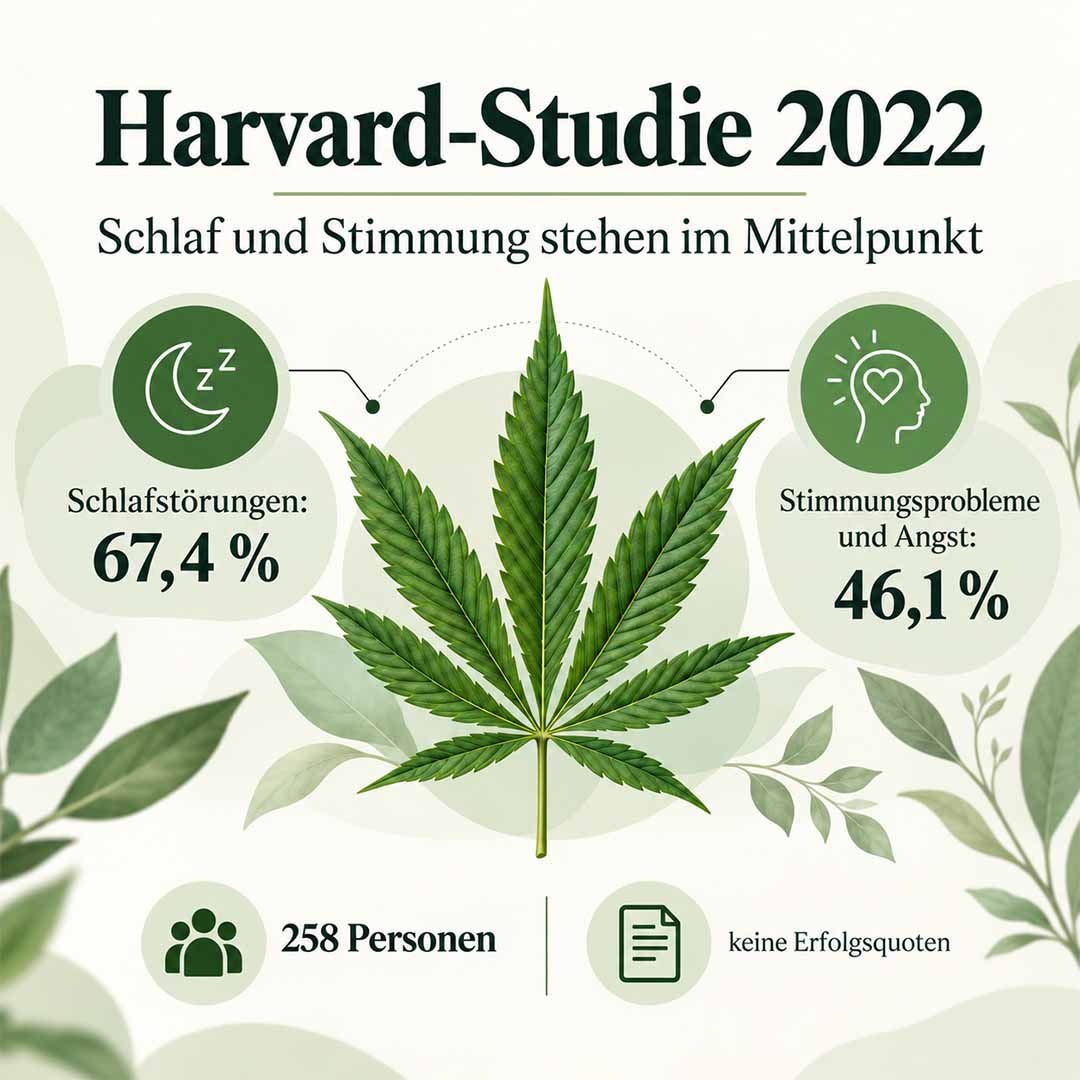
2022 Harvard Study: Sleep and Mood Take Center Stage
A research team led by Dahlgren of Harvard Medical School surveyed 258 women in perimenopause and postmenopause. About 79 percent reported using medical cannabis to treat menopause-related symptoms. The following reasons for use were cited particularly frequently by the respondents:
- Sleep disorders: 67.4 percent
- Mood disorders and anxiety: 46.1 percent
However, these figures do not represent success rates. They describe why the respondents used cannabis, not how many people actually experienced an improvement. Furthermore, the study examined various cannabis products, not just CBD drops.
2023 Canadian Study: Many female users report subjective benefits
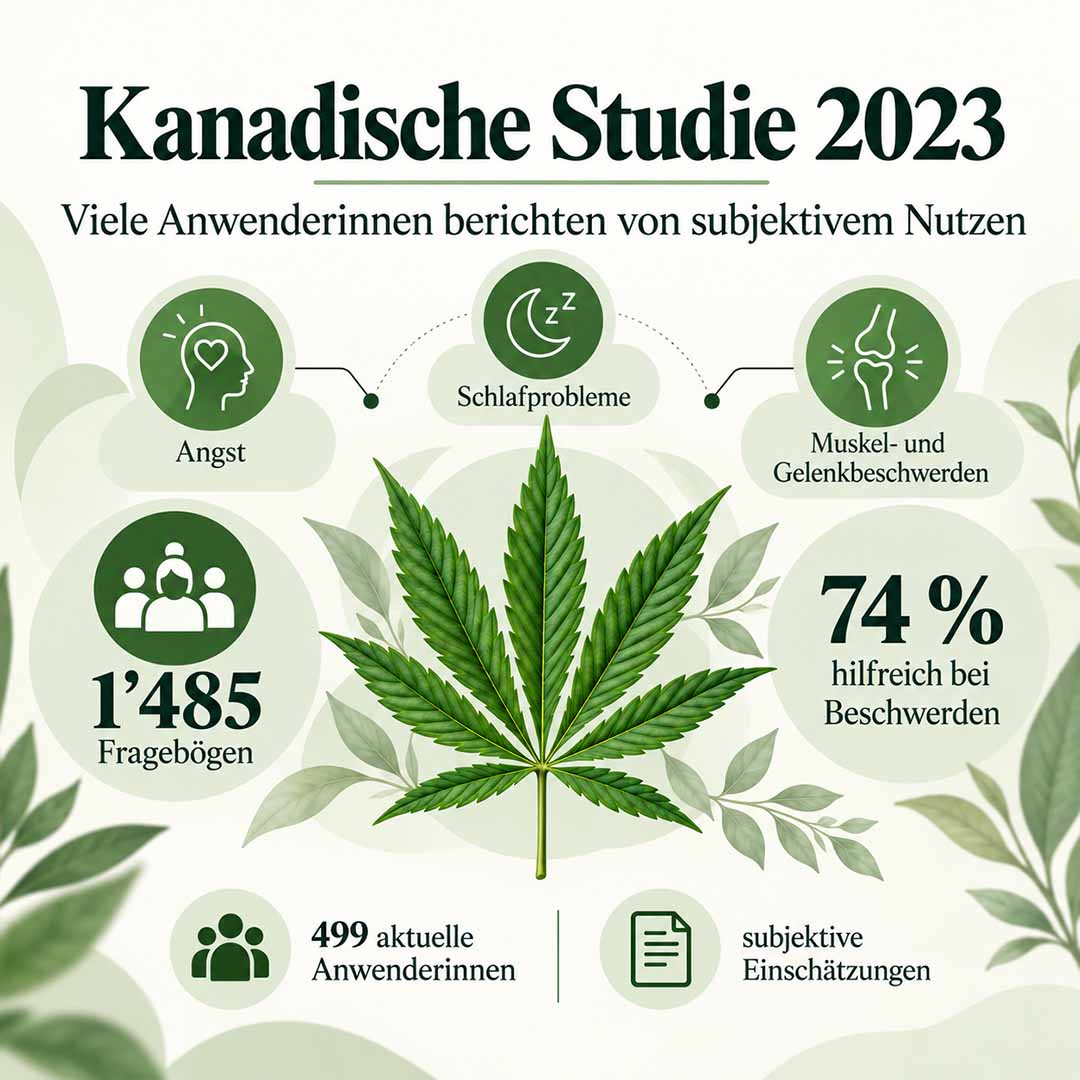
Another study by Babyn and colleagues analyzed 1,485 questionnaires from women aged 35 and older in the Canadian province of Alberta. Of these, 499 women reported currently using cannabis. Among current users, 74 percent described cannabis as helpful for their symptoms. Sleep problems, anxiety, and muscle and joint pain were particularly common concerns.
Here, too, context is key: The study is based on personal assessments and does not include a placebo control. Furthermore, the results cannot be directly applied to pure CBD products. What can we learn from this? Cannabis products play a noticeable role in the daily lives of some women going through menopause.
CBD for Hot Flashes and Night Sweats: Is There Any Evidence?
Hot flashes are among the most well-known symptoms of menopause. They occur in connection with changes in the body’s temperature regulation. They can cause sudden feelings of heat, sweating, and sometimes even heart palpitations. They are often particularly distressing at night, when sweating disrupts sleep.
It is therefore understandable to ask whether CBD can help with hot flashes. However, there is currently insufficient scientific evidence to support such an effect. For example, the international professional organization The Menopause Society (2023) clearly opposes the use of cannabinoids to treat these specific symptoms due to the lack of evidence. Anyone suffering from severe hot flashes should consult a doctor to determine which hormonal or non-hormonal treatments are appropriate for their individual situation.
Can CBD improve sleep and lower cortisol levels?
Many women experience changes in their sleep patterns during menopause. Hormonal fluctuations, nighttime hot flashes, and psychological stress can all play a role. As a result, those affected are increasingly interested in CBD and its potential effects on stress and sleep.
CBD for Sleep Disorders: What Does the Research Show?
A systematic review with meta-analysis from 2025 examined six randomized trials involving a total of 1,077 participants. The results showed that certain cannabinoid preparations led to improvements in subjective sleep quality. However, pure CBD supplements did not show any statistically significant improvement compared to placebo. Furthermore, the studies examined did not specifically address menopausal sleep disorders. The results therefore do not allow for a general medical recommendation.
Can CBD lower cortisol levels?
Cortisol is a hormone involved, among other things, in stress regulation. In a small clinical study conducted by Zuardi and colleagues in 1993, CBD influenced the natural daily fluctuation of cortisol levels—though the usual decline in cortisol was somewhat attenuated. A study by Appiah-Kusi (2020) also showed no statistically significant difference in the cortisol response between a CBD group and a placebo group in stressful situations. A reliable reduction in cortisol levels due to cannabidiol has therefore not been demonstrated in menopausal women.
When Should You Avoid Taking CBD? Safety and Interactions
Even plant-based active ingredients can cause side effects. Potential drug interactions are particularly important to consider, as cannabidiol can affect enzymes in the liver that are involved in the metabolism of certain medications.
Caution is especially advised in the following situations:
- If you take medication regularly: CBD may interact with certain medications (e.g., blood thinners, blood pressure medications).
- For hormone replacement therapy: Whether interactions may occur depends on the specific hormone preparation and requires a medical evaluation.
- For liver diseases: Special caution is required if you have existing liver problems.
In Switzerland, there is also the issue of legal classification. According to the Federal Office of Public Health (FOPH), different regulations apply to hemp products depending on their intended use.
Conclusion & Discover the Diversity of Plants
CBD during menopause remains an exciting area of research. In particular, the interaction between cannabidiol, sex hormones, and the endocannabinoid system raises questions that have not yet been conclusively answered by science. Nevertheless, surveys show that many women subjectively value hemp products as a helpful and relaxing part of their daily lives.
If you’d like to discover the potential of the hemp plant for your own wellness routine, you’ll find the perfect products here. For peaceful, mindful moments in the evening, many of our customers enjoy using our hand-selected, natural Swiss CBD flowers . If you prefer a particularly simple product, you can use high-quality CBD oils can be seamlessly integrated into your daily routine. And for anyone looking for a quick, smoke-free solution on the go, our modern Swiss vape pens offer a first-class and discreet alternative.
Frequently Asked Questions About CBD and Menopause (FAQ)
How can CBD help during menopause?
It has not been conclusively established scientifically whether CBD alleviates menopausal symptoms. Although cannabidiol is being studied in relation to sleep, stress, and the endocannabinoid system, there are as yet no convincing clinical studies to support its use as a targeted medical treatment.
What are women’s experiences with CBD drops during menopause?
Many women report having positive experiences, particularly with regard to anxiety and sleep problems. Scientific surveys (such as the 2022 Harvard study) confirm that many women use cannabis products for these reasons, but do not prove that pure CBD drops are guaranteed to be effective.
Why doesn’t CBD provide immediate relief from hot flashes and night sweats?
To date, there is insufficient clinical evidence that CBD affects temperature regulation or effectively reduces hot flashes or night sweats. Professional organizations such as The Menopause Society therefore do not recommend cannabinoids for the treatment of these specific symptoms.
How does CBD affect cortisol levels?
Small-scale studies have examined whether CBD modulates the body’s stress response and cortisol release. However, the results to date are inconclusive, which is why a reliable, universally applicable reduction in the stress hormone cortisol through cannabidiol has not been demonstrated in humans.
What interactions can CBD have with hormone replacement therapy?
Since CBD affects certain liver enzymes (such as the cytochrome P450 system) that are responsible for breaking down many medications, it can alter the breakdown of hormone medications. Anyone undergoing hormone replacement therapy should therefore consult a doctor before using CBD.
Sources and Further Information
- Stute, P. (2021): Cannabis for the Treatment of Menopausal Syndrome!? Swiss Journal of Gynecology. Read more
- Dahlgren, M. K. et al. (2022): A survey of medical cannabis use during perimenopause and postmenopause. Menopause. Learn More
- Babyn, K. et al. (2023): Cannabis use for menopause in women aged 35 and older: a cross-sectional survey on usage patterns and perceptions in Alberta, Canada. BMJ Open. Read more
- The Menopause Society (2023): The 2023 Position Statement on Nonhormonal Therapy. Menopause. Learn More
- Santos da Silva, G. H. et al. (2025): Effectiveness of Cannabinoids on Subjective Sleep Quality in People with and without Insomnia or Poor Sleep: A Systematic Review and Meta-Analysis of Randomized Studies. Sleep Medicine Reviews. Read more
- Santoro, A. et al. (2021): The Complex Interplay between the Endocannabinoid System and the Estrogen System in the Central Nervous System and the Periphery. International Journal of Molecular Sciences. Learn More
- Zuardi, A. W. et al. (1993): Effect of cannabidiol on plasma prolactin, growth hormone, and cortisol in human volunteers. Brazilian Journal of Medical and Biological Research. Read more
- Appiah-Kusi, E. et al. (2020): Effects of short-term cannabidiol treatment on the response to social stress in subjects at high clinical risk of developing psychosis. Psychopharmacology. Learn More
- Federal Office of Public Health (FOPH): Current Legal Status of Hemp and Cannabis Products. More information
- Federal Office for Food Safety and Veterinary Affairs (BLV): Cannabis, hemp extracts, and cannabinoids as food. Learn More
- Federal Office for Food Safety and Veterinary Affairs (BLV): Cannabidiol (CBD) in Cosmetics. Read more