Ordered by 15:00, shipped the same day! Free shipping starting CHF.- 80!



 B2b registration
  Client login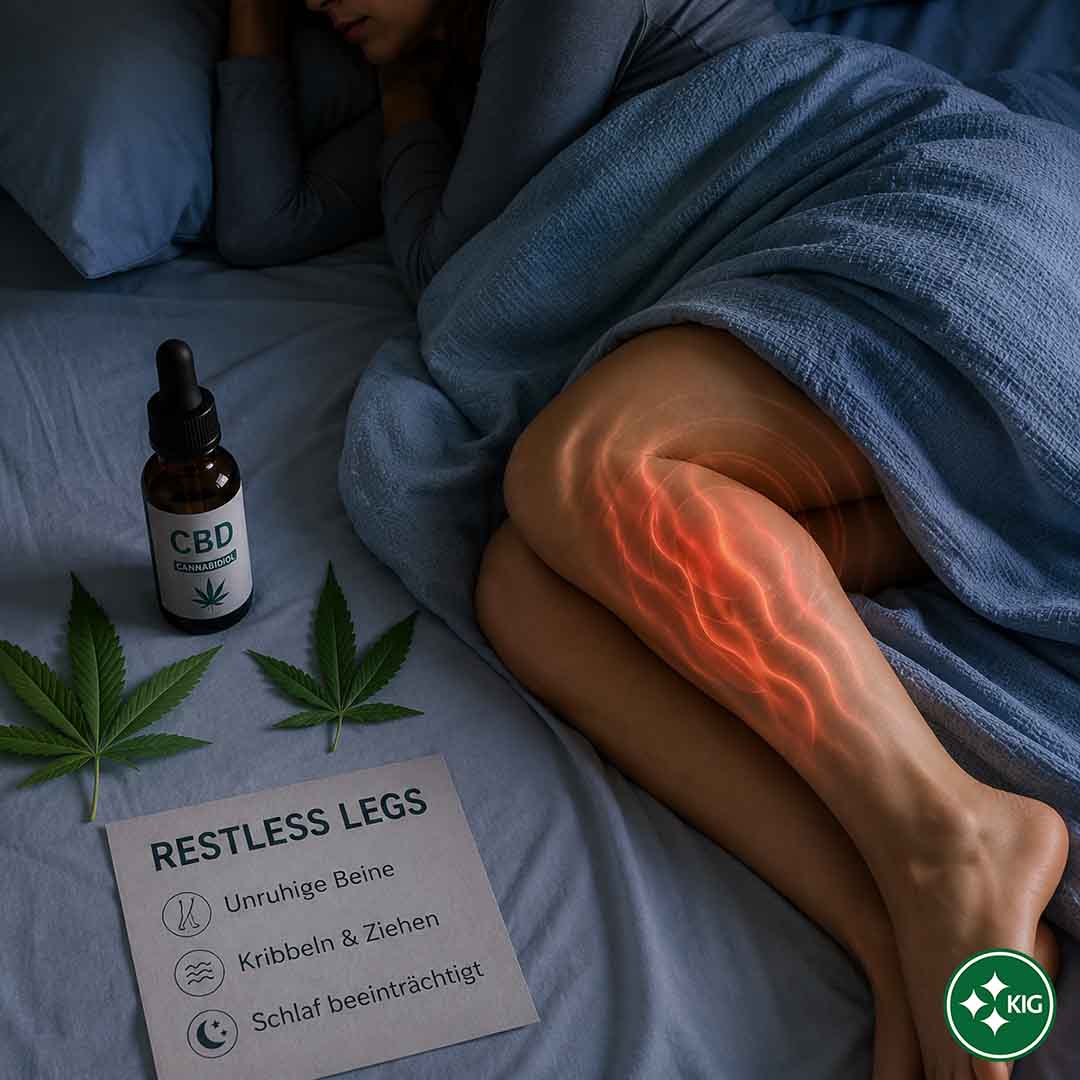
CBD for restless legs is a topic that more and more people are researching. No wonder: Restless Legs Syndrome, or RLS for short, can take a heavy toll on daily life. Typical symptoms include restless legs, an almost irresistible urge to move, tingling, pulling sensations, or other unpleasant feelings that occur especially in the evening or at night.
Many people affected by this condition have trouble sleeping, feel exhausted during the day, and are looking for complementary ways to better manage their symptoms. CBD comes up time and again in this context. Cannabidiol is a non-intoxicating cannabinoid derived from the hemp plant and is frequently discussed in relation to sleep, stress, the nervous system, and inner peace.
Nevertheless, it’s important to note that CBD is not a miracle cure for restless legs syndrome. Research on CBD for RLS is still in its early stages. This article explains what RLS is, why sleep and stress play a major role, what the research actually says so far, and why a medical evaluation remains important.
If you’d first like to understand why cannabinoids are associated with the body in the first place, our article on the endocannabinoid system provides a clear introduction. In addition, our blog post on CBD and dreaming explores just how complex the relationship is between cannabinoids, sleep perception, and recovery.
In a Nutshell: What Is Restless Legs Syndrome?
Restless Legs Syndrome is a neurological disorder. The English name roughly translates to “restless legs syndrome.” People with this condition often feel a strong urge to move their legs. This may be accompanied by unpleasant sensations, such as tingling, pulling, burning, a feeling of pressure, or pain.
Typically, the symptoms worsen at rest. Many people notice them especially when sitting, lying down, watching TV, reading, or just before falling asleep. Moving around often provides temporary relief. That is exactly why those affected sometimes get up repeatedly, walk around, massage their legs, or stretch.
Another characteristic is the daily rhythm. RLS symptoms are often more severe in the evening or at night than during the day. This can make it difficult to fall asleep, and sleep quality also suffers. This makes RLS not only a leg problem, but also a sleep and stress issue.
Why RLS Has Such a Significant Impact on Sleep
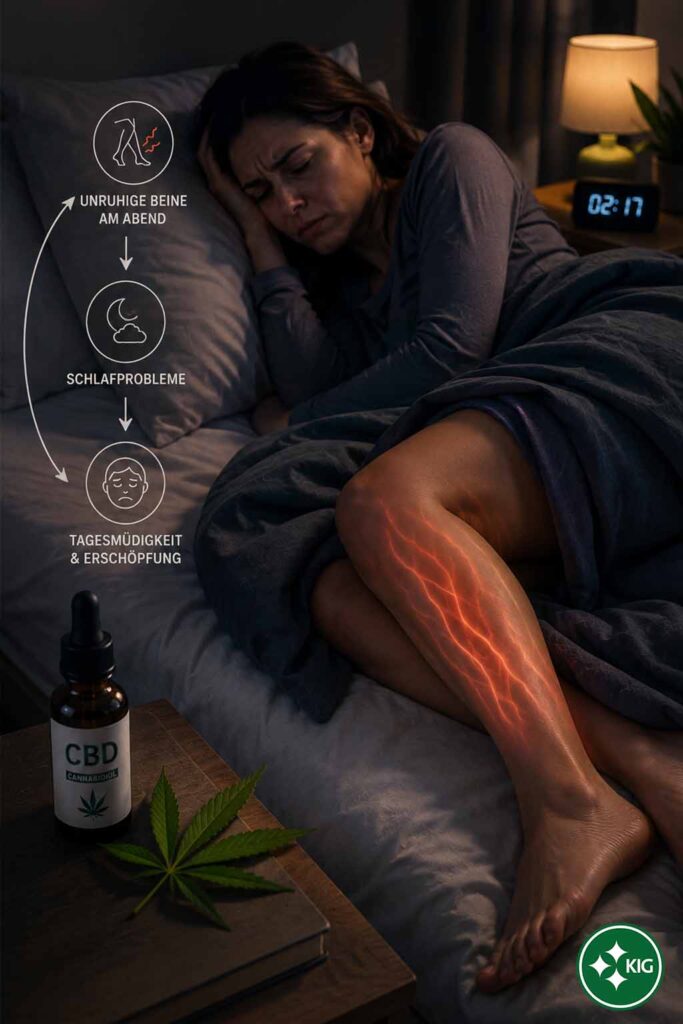
Restless legs can severely disrupt sleep. When the legs become restless just when the body is supposed to be winding down, it creates a frustrating cycle. You lie in bed, wanting to sleep, but feel an urge to move or experience strange sensations. Moving helps for a short while, but then the symptoms often return.
Over time, this can lead to trouble falling asleep, trouble staying asleep, and daytime sleepiness. People who sleep poorly are more easily irritated during the day, have a harder time concentrating, and have less physical stamina. This can affect work, family, leisure time, and social activities.
That’s exactly why many people turn to CBD for restless legs syndrome. Often, it’s not just about the legs, but rather about sleep, inner restlessness, and the feeling of being unable to wind down in the evening. This connection makes sense. Nevertheless, it’s important to remember: Sleep problems associated with RLS have medical causes and should not simply be self-treated.
Causes and Triggers: Why It’s Important to Get a Diagnosis
The exact causes of RLS are not fully understood. A link to dopamine, iron metabolism, and the central nervous system is often discussed. In some people, there is a family history of the condition. Others develop RLS in connection with certain triggers or comorbid conditions.
RLS is associated with, among other things, iron deficiency or impaired iron metabolism, pregnancy, kidney disease, and polyneuropathies. Certain medications, lack of sleep, and alcohol or caffeine can further exacerbate symptoms in some people.
Leg discomfort caused by cramps, circulatory problems, joint pain, or back issues can also present with similar symptoms and should be distinguished from other conditions.
That’s why an accurate diagnosis is important. Not every tingling sensation in the legs automatically means restless legs syndrome. Doctors assess typical symptoms, possible triggers, medications, and often laboratory test results such as ferritin levels or iron status. The better the cause is identified, the more effectively treatment can be planned.
CBD for Restless Legs: Why So Many People Are Turning to It
CBD is sought after for restless legs syndrome primarily because RLS is so closely linked to sleep, inner restlessness, and stress. Many people are familiar with CBD in the general context of relaxation, evening routines, or well-being. This naturally raises the question of whether CBD could also play a role in treating restless legs.
Cannabidiol does not have the same intoxicating effects as THC. It is increasingly being studied in relation to the endocannabinoid system, stress responses, sleep regulation, pain processing, and inflammatory processes. These topics overlap in part with the symptoms experienced by people with RLS.
However, that does not mean that CBD has been proven to help with RLS. There is a big difference between a plausible research approach and a proven treatment. It is precisely this distinction that is important so that those affected do not develop false expectations.
What does the research say about CBD and RLS?
Research on CBD for restless legs syndrome has been very limited so far. A small placebo-controlled study involving 18 people who had RLS as well as Parkinson’s disease and REM sleep behavior disorder found no difference between CBD and placebo. However, because of the small and specific patient group, the results of this study cannot be easily generalized to all people with RLS.
At the same time, there are initial findings from research on cannabis-based products. An open-label study published in 2026 examined a combination of THC and CBD in people with multiple sclerosis and RLS. The study found that RLS symptoms improved over the course of the study. However, since there was no placebo group and THC and CBD were used together, it is not possible to conclude with certainty that CBD alone has an effect.
Additional controlled studies have already been registered. These include a randomized, double-blind, placebo-controlled Phase II study using a CBD-rich cannabis extract, as well as a study using a cannabis preparation containing CBD and THC. Some of the results from these studies are still pending. We remain eager to see the results.
Overall, the available data is still too limited to make a general recommendation. At the same time, the use of cannabinoids for restless legs syndrome is undergoing further medical investigation, and additional clinical studies are expected to provide more clarity. The fact that research is being conducted into potential benefits is a positive sign, but it does not yet constitute proof of efficacy. Only such studies can show whether, to what extent, and under what conditions CBD or other cannabinoids actually provide a benefit.
CBD, Sleep, and Inner Peace: What We Can Say With Caution
Many people with RLS turn to CBD not only because of their leg symptoms, but also because of the resulting effects: poor sleep, tension, fatigue, and stress. The search intent is particularly clear here. People want to unwind in the evening and better cope with their daily lives.
CBD is commonly discussed in relation to sleep quality, stress, and inner balance. Nevertheless, this should not be taken to imply a direct claim such as “CBD helps with restless legs.” Sleep is complex. RLS is a neurological disorder. And symptoms can be exacerbated by many factors.
To put it cautiously: Anyone interested in CBD should approach the topic with a realistic perspective. CBD can be discussed in the broader context of hemp and wellness. However, in cases of genuine RLS symptoms, severe sleep problems, or when taking other medications, the decision should be left to a doctor. Still, it’s worth a try.

What else helps with RLS?
For restless legs syndrome, there are various measures that may be helpful, depending on the cause and severity. These include good sleep hygiene, regular exercise, reviewing medication, checking iron levels, and being mindful of alcohol, nicotine, and caffeine consumption.
Sleep hygiene means, for example: going to bed and waking up at regular times, having a quiet bedroom, limiting screen time before bed, and following an evening routine that doesn’t overstimulate you. Gentle exercise during the day can also be helpful. In contrast, very intense physical activity right before bed can be counterproductive for some people.
Iron is an important factor. Clinical guidelines emphasize that iron levels should be checked regularly in patients with RLS, as low iron levels may play a role. A medical professional should determine whether supplementation is appropriate.
These measures are not a substitute for treatment, but they can help you better structure your daily life. It’s important to remember: What works for one person may not work for another.
CBD Products and Restless Legs: Why We Remain Cautious
Many people look directly for CBD products when they suffer from restless legs syndrome. This search is understandable. At the same time, RLS is a medical condition, and not every commercially available CBD product should be considered a medication for RLS.
Anyone interested in hemp and CBD in general—regardless of medical considerations—will find that Herba di Berna offers a shop with a wide selection of CBD products , as well as in-depth information about hemp. In our Bern-based online CBD shop, you’ll find high-quality CBD drops, and can purchase CBD cosmetics and CBD hemp directly, and have everything delivered via fast express shipping throughout Switzerland.
When should you seek medical help?
Medical care is recommended if restless legs occur regularly, disrupt sleep, or interfere with daily life. Severe pain, numbness, cramps, swelling, circulation problems, or symptoms in just one leg should also be evaluated.
It is especially important to consult a doctor if you are pregnant, taking medication, or suffering from kidney disease, diabetes, polyneuropathy, or iron deficiency. Even if sleep deprivation is already causing daytime sleepiness, trouble concentrating, or exhaustion, RLS should not simply be dismissed as harmless restlessness.
Conclusion: CBD for restless legs syndrome remains an open area of research
CBD for restless legs syndrome (RLS) is frequently sought after because RLS is closely linked to sleep, inner restlessness, and quality of life. The fact that intensive research is being conducted in this area and that the medical community recognizes clear potential gives cause for hope. In our counseling practice, too, we consistently receive positive feedback from people with RLS who have been able to improve their overall situation—including their sleep—as a result.
At the same time, the scientific evidence regarding CBD as a standalone treatment remains limited. Herba di Berna is committed to providing honest information rather than making false promises: We offer you in-depth knowledge about hemp and a selection of products; however, if you experience genuine and recurring RLS symptoms, seeing a doctor is always the most important step.
FAQ: Frequently Asked Questions about CBD for Restless Legs
What are the experiences with CBD for restless legs and inner restlessness?
A specific effect has not yet been confirmed by sufficiently large and controlled studies. Nevertheless, many people are interested in CBD for restless legs as they seek support for accompanying symptoms like stress, sleep issues, and general restlessness.
What are the typical symptoms of restless legs syndrome?
Sufferers experience a strong urge to move their legs, often accompanied by unpleasant tingling or pulling sensations. These discomforts typically worsen during periods of rest in the evening or at night, while movement provides temporary relief.
How is CBD for restless legs connected to the endocannabinoid system?
Research is intensively investigating how cannabinoids influence sleep, stress responses, and pain processing via the body’s endocannabinoid system. Since these areas could play a role in RLS, its potential is being explored, though this does not yet constitute a proven treatment.
Can the use of CBD for restless legs cure the syndrome?
No, there is no reliable scientific evidence that CBD has a curative effect on restless legs. Restless legs syndrome (RLS) is a complex neurological disorder whose causes must be medically evaluated.
Why should iron levels be medically checked if you have restless legs?
An impaired iron metabolism and low ferritin levels can play a significant role in the development of RLS. Therefore, having your blood values checked by a healthcare professional is essential to determine the exact need for treatment.
What should be considered before trying CBD for restless legs?
For mild, occasional restlessness, an interest in hemp products is entirely understandable. However, if symptoms occur regularly, chronic sleep problems exist, or medications are being taken, use must absolutely be medically evaluated beforehand.
List of sources
Lavender, I., et al. (2024): Using Cannabis and CBD to Sleep: An Updated Review.
PubMed: Using Cannabis and CBD to Help You Sleep
International Restless Legs Syndrome Study Group: Toward a Better Definition of Restless Legs Syndrome.
PubMed: Toward a Better Definition of Restless Legs Syndrome
Restless Legs Syndrome Foundation: Diagnosis & Treatment.
Restless Legs Syndrome Foundation: Diagnosis & Treatment
Winkelman, J. W. et al. (2025): Treatment of restless legs syndrome and periodic limb movement disorder: an American Academy of Sleep Medicine clinical practice guideline. Journal of Clinical Sleep Medicine.
AASM Guidelines on Restless Legs Syndrome
de Almeida, C. M. O. et al.: The Effect of Cannabidiol on Restless Legs Syndrome/Willis-Ekbom Disease in Patients with Parkinson’s Disease and REM Sleep Behavior Disorder.
PubMed: CBD for Restless Legs Syndrome Restless Legs Syndrome.
PubMed: Cannabis for Restless Legs Syndrome Ghorayeb, I.: More evidence of cannabis’s efficacy in restless legs
ClinicalTrials.gov: CBD Extract for the Treatment of RLS