Ordered by 15:00, shipped the same day! Free shipping starting CHF.- 80!



 B2b registration
  Client login
Anyone who deals with cannabis almost automatically encounters two terms: cannabis terpenes and also: sativa and indica. Sativa is traditionally described as “activating”, while indica is often perceived as “heavy” or “physical”. This classification is widespread – but it only explains part of the overall picture. Terpenes are a decisive factor for the character of a strain.
They not only determine the smell of a cannabis strain, but also have a significant impact on how its overall profile is perceived by the senses. To better understand the plant, it is therefore worth taking a closer look at these organic compounds.
What are terpenes or cannabis terpenes anyway?
Terpenes are natural fragrances produced by plants. They are found everywhere in nature, for example in:
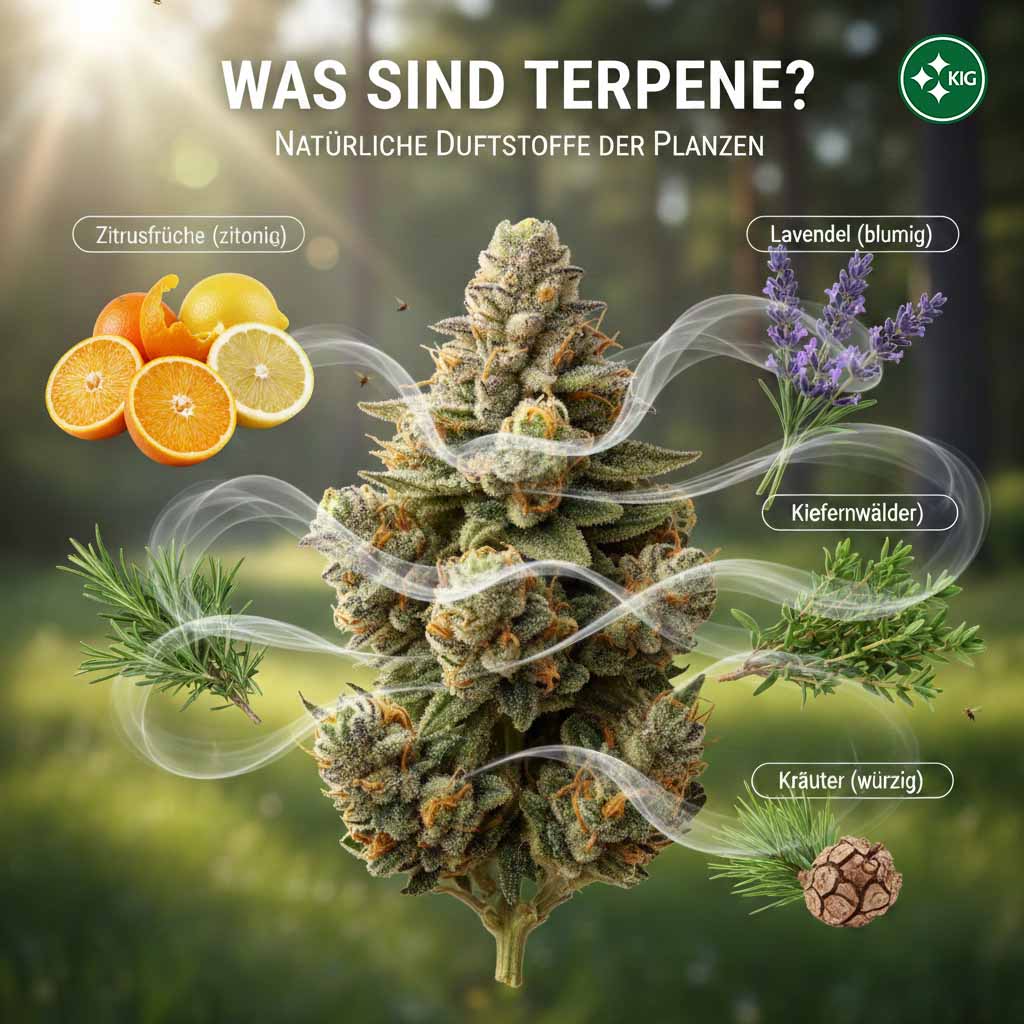
- Citrus fruits (fresh, lemony aroma)
- Lavender (floral, slightly sweet)
- Pine forests (resinous, woody)
- Herbs such as rosemary or thyme
Cannabis also produces a large variety of such compounds. They are produced in the same glands as cannabinoids (e.g. THC or CBD) and are a normal part of plant chemistry.
Terpenes perform various functions in nature. They can attract or keep insects away and contribute to how a plant interacts with its environment. For humans, they are mainly perceptible via the nose and sense of taste.
Cannabis terpenes : More than just fragrance
For a long time, the focus on cannabis was almost exclusively on the THC content. Today, a more differentiated view is taken: The experience of a strain results from the interaction of several groups of substances, above all:
This interaction is often referred to as the “entourage effect“. This means that the substances together shape the overall profile instead of acting in isolation.
It is important to note that terpenes are not intoxicants in their own right. They do not directly alter consciousness like THC, but they do contribute to the sensory and subjective perception of a strain.
Common cannabis terpenes
Cannabis can contain over a hundred different terpenes. Some occur particularly frequently and characterize typical aromas.
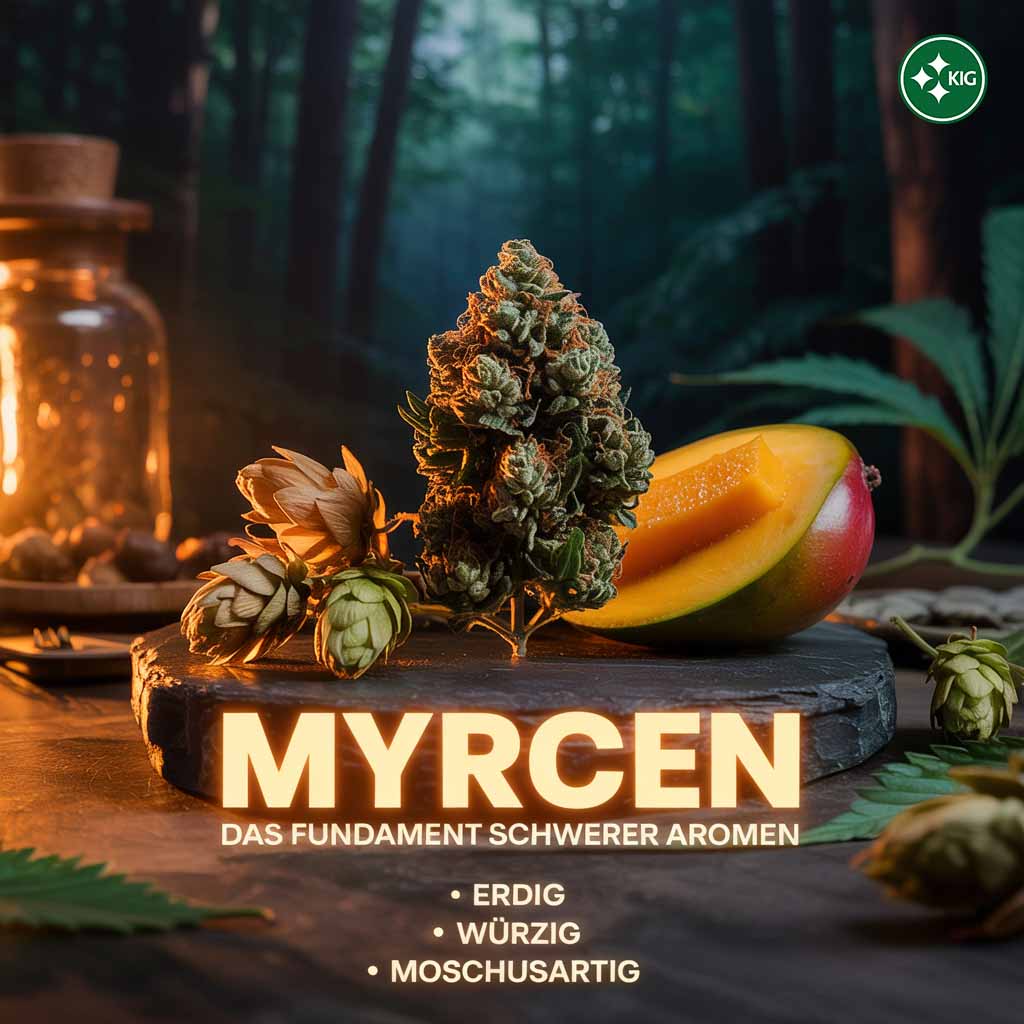
Myrcene
Fragrance: earthy, spicy, slightly musky
Also found in hops and mango
Often in varieties with a strong, “heavy” aroma
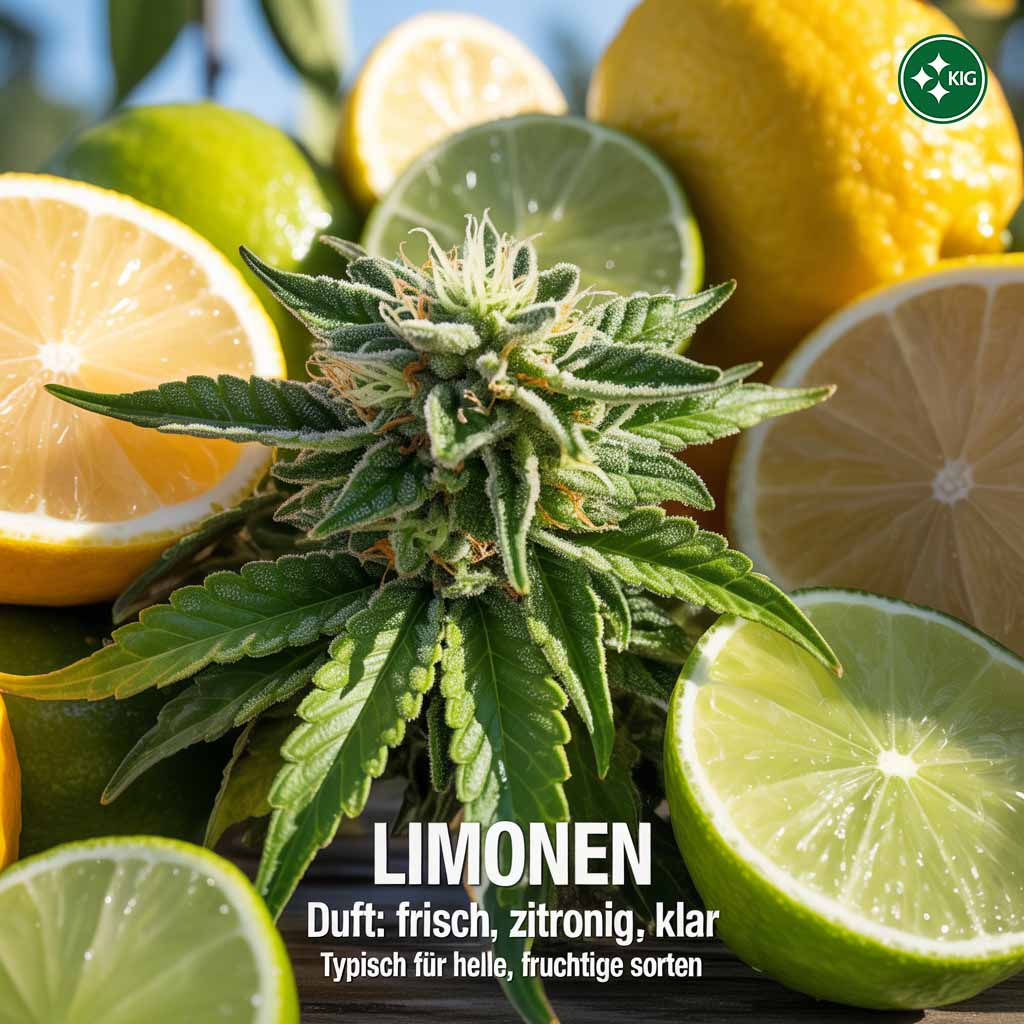
Limes
Fragrance: fresh, lemony, clear
Typical of citrus peel
Often in varieties with a bright, fruity fragrance profile
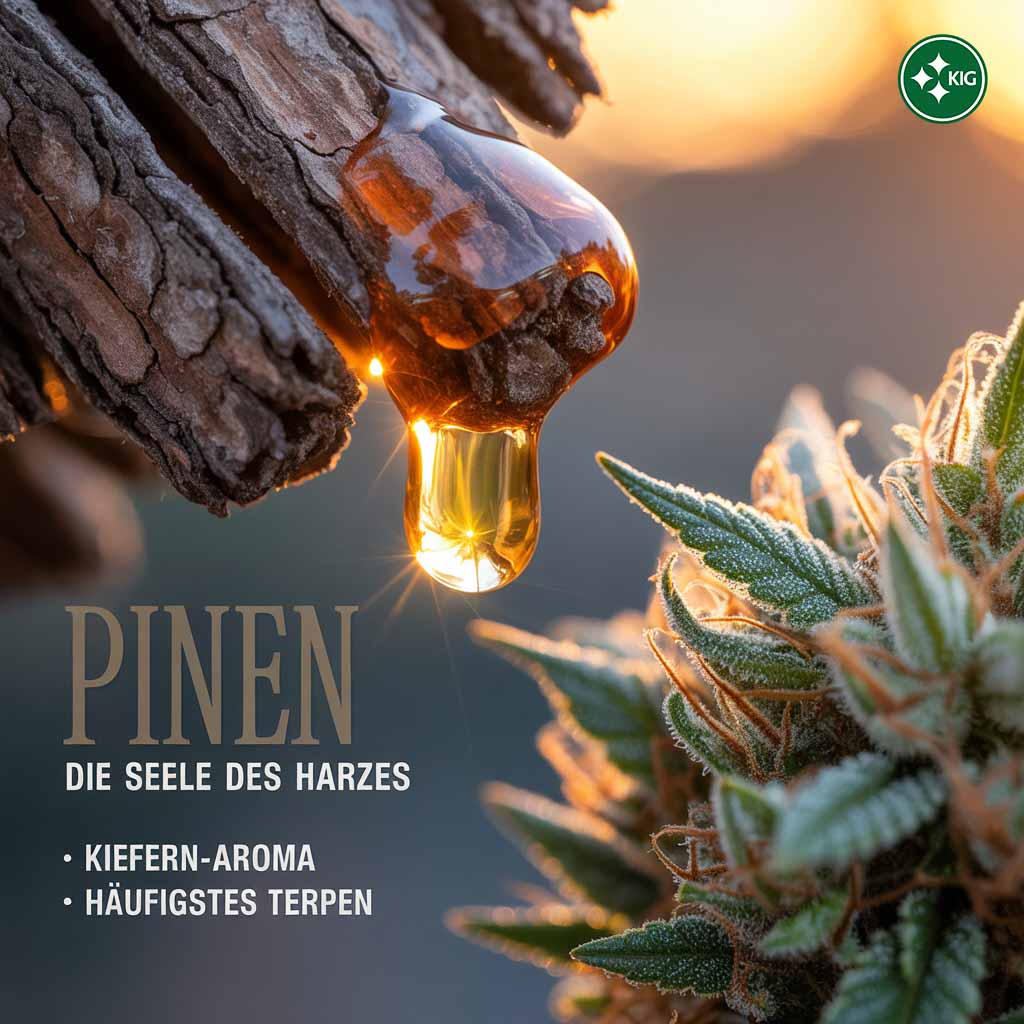
Pines
Fragrance: woody, resinous, reminiscent of pine needles
One of the most common terpenes in nature
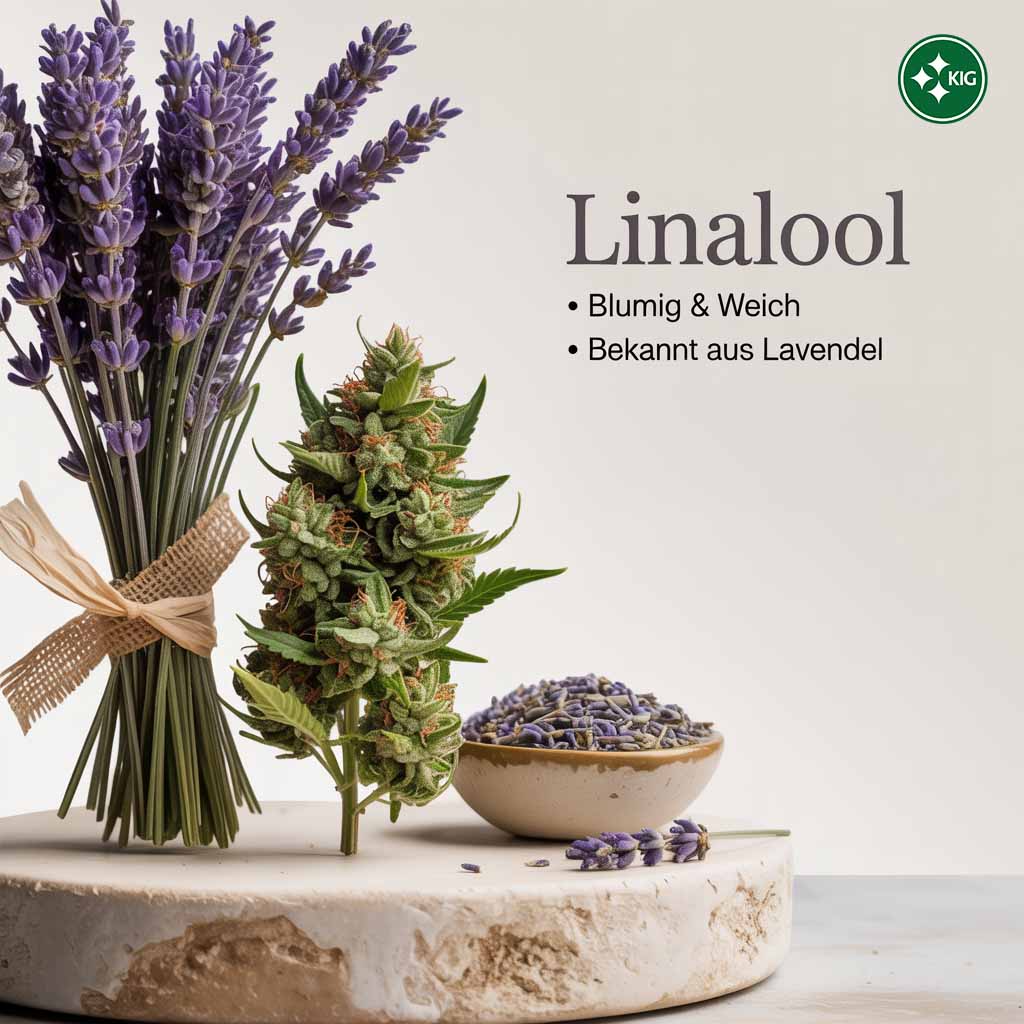
Linalool
Fragrance: floral, soft, slightly sweet
Known from lavender
These terpenes never occur in isolation, but always in combination. The relationship between them is crucial.
Sativa and indica: origin of the terms
The terms sativa and indica originally come from botany and refer to the appearance of the plants, not the experience.
Sativa and indica plants originally differ mainly in their external appearance. Sativa plants typically grow tall and rather slender, while indica plants remain more compact and bushy. The leaf shape also differs: Sativa has rather narrow leaves, while Indica has broader ones. In terms of region of origin, sativa lines are more often associated with areas close to the equator, while indica plants tend to originate from mountainous or drier regions.
It was only later that these terms became associated with certain sensations. In modern breeding, however, most varieties are hybrids, i.e. mixtures of both lines. The pure designation Sativa or Indica therefore says only a limited amount about the actual profile.
Why does each variety feel different?
Two strains can have a similar THC content and still be perceived very differently. There are several reasons for this.
1. different terpene profiles
Each variety has its own “fragrance fingerprint”. The type of terpenes and their ratio influence the smell, taste and overall impression of a variety. A lemony, fresh profile is often described differently than an earthy or spicy one – similar to coffee or wine.
2. interaction with cannabinoids ( cannabis terpenes )
Terpenes never stand alone. They occur together with THC, CBD and other cannabinoids. This combination characterizes the overall appearance of a strain. Two strains with the same THC value can therefore differ significantly if their terpenes are different.
3. context and perception
How cannabis is experienced depends not only on the plant itself. External and personal factors such as the environment, one’s own mood, expectations and previous experiences also play a role. Terpenes influence the sensory experience, but always in interaction with these framework conditions.
From Sativa/Indica to Chemovars
Today, many experts consider the simple division into sativa and indica to be too crude. Instead, there is increasing talk of chemovars.
A chemovar describes a plant on the basis of its chemical profile, i.e.:
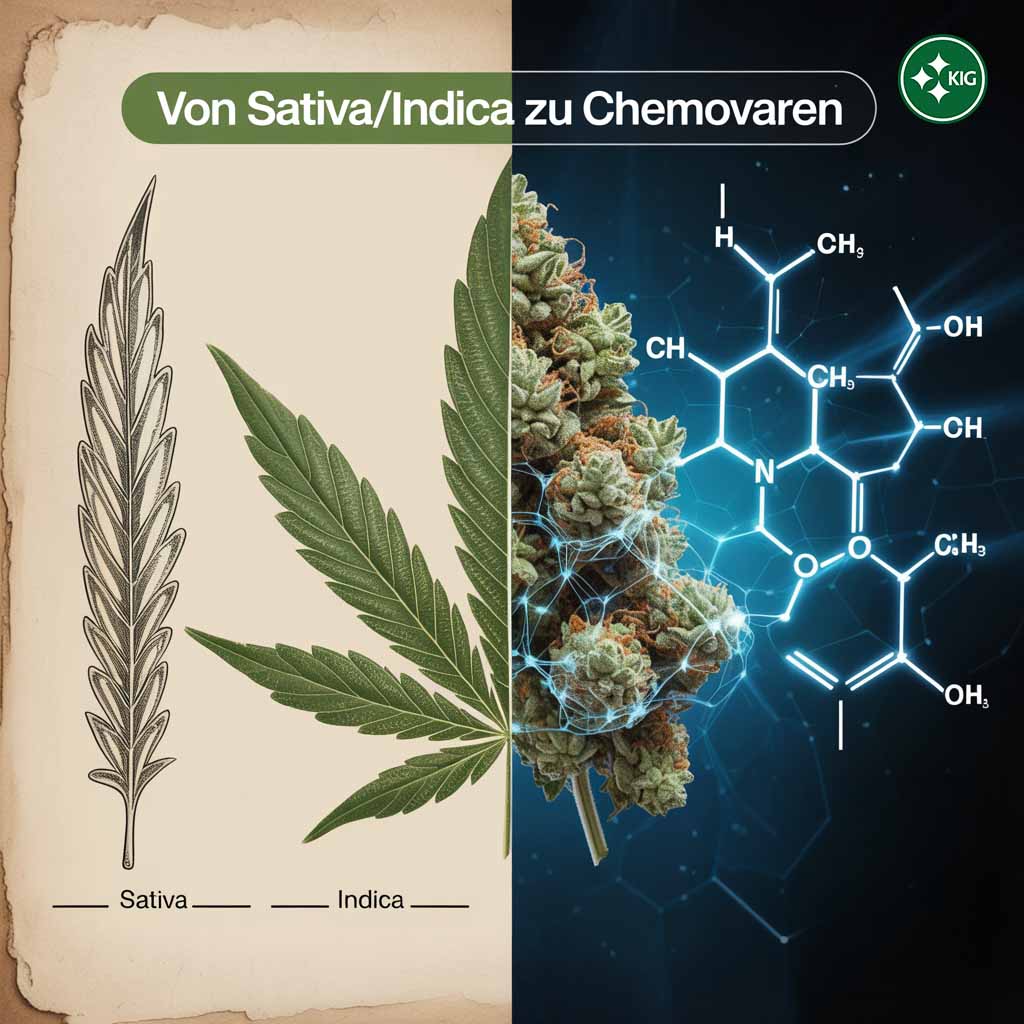
Which cannabinoids are present?
Which terpenes dominate?
What is the relationship between them?
This approach is more precise because it is based on measurable properties rather than external characteristics or historical designations.
Cannabis terpenes and the sensory profile
Terpenes primarily shape the aroma and flavor profile. This sensory experience influences how a variety is classified. One example:
- Citrusy, fresh fragrances are often described as “clear”
- Earthy, spicy notes rather than “heavy” or “dense”

However, such descriptions are subjective. Terpenes do not produce fixed, universal effects, but rather contribute to the overall character of a variety.
A comparison with wine or coffee helps to understand: there too, fragrances strongly determine how a product is perceived, without being able to consider their effect in isolation.
Why simple categorization is no longer enough
The idea that “Sativa does this, Indica does that” is easy to understand, but oversimplified. Modern breeding has led to a wide variety of hybrids. The actual experience results from the cannabinoid profile, the terpene profile and individual and situational factors.
The terms sativa and indica are therefore more cultural guides than precise descriptions.
Conclusion on cannabis terpenes and the differences between sativa and indica
Terpenes are a central component of what distinguishes cannabis varieties from one another. They give cannabis its characteristic aroma, clearly differentiate varieties from one another in terms of their sensory properties and contribute to their individual overall profile. Sativa and Indica are historically evolved terms, but for a deeper understanding it is worth looking at the chemical profile of a strain. If you want to look at cannabis in a differentiated way, think less in rigid categories and more in combinations of cannabinoids and terpenes. This is exactly where the diversity of this plant is revealed.
FAQ – Häufige Fragen zu Terpenen und Chemovaren
Welches ist das häufigste Terpen in Cannabis und wie riecht es?
Myrcene is one of the most abundant terpenes in the cannabis plant and is characterized by an earthy, spicy and slightly musky aroma. It is also found in large quantities in hops or mangoes, which is why it is often associated with “heavy” or very strong odor profiles.
Was genau sind Terpene in der Cannabispflanze?
Terpenes are organic compounds that are responsible for the characteristic scent and taste of cannabis. They are found in the resin glands of the plant and protect it from pests in nature or attract pollinators. When consumed, they significantly shape the sensory experience and contribute to the individual character of each strain.
Können Terpene ihre Wirkung auch isoliert entfalten?
As a rule, terpenes never occur in isolation, but always act in complex interaction with other terpenes and cannabinoids. This relationship is decisive for the overall sensory profile of a variety. Experts often compare this to the bouquet of a wine, where the sum of all the ingredients also determines the character.
Warum wird der Begriff Chemovar heute gegenüber Sativa und Indica bevorzugt?
The classification into sativa and indica is primarily based on the external characteristics of the plant, but says little about the actual chemical composition. A chemovar, on the other hand, describes the plant based on measurable facts such as the exact cannabinoid content and the dominant terpene profile. This enables a much more precise classification of the quality and the expected properties.
List of sources
Pharmazeutische Zeitung – On the trail of the entourage effect
https://www.pharmazeutische-zeitung.de/dem-entourage-effekt-auf-der-spur-159858/
Nature Scientific Reports – https://www.nature.com/articles/s41598-021-87740-8
DoktorABC – Sativa vs Indica: Differences simply explained
https://www.doktorabc.com/de/allgemeine-medizin/medizinisches-cannabis/sativa-indica