 Ordered by 15:00, shipped the same day! Free shipping starting CHF.- 80!



 B2b registration
  Client login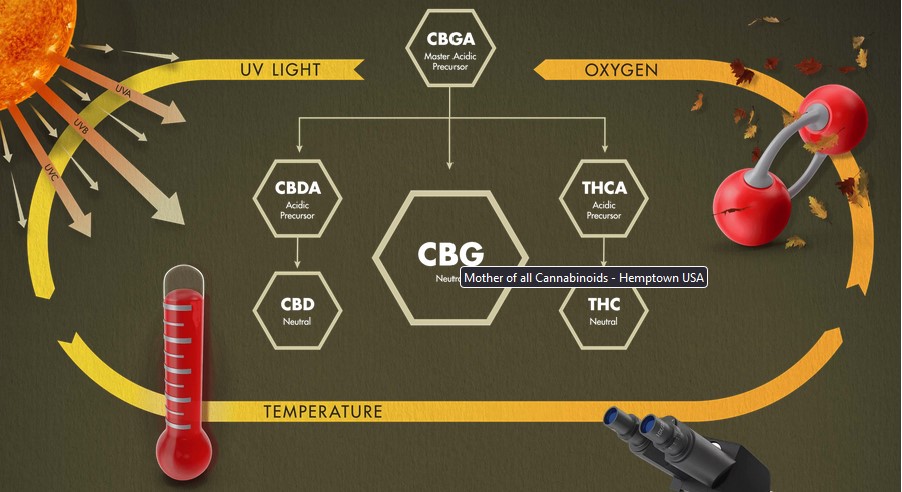
What is CBG (cannabidiol)? This question comes up time and time again. While most people have at least heard of CBD (cannabidiol) and THC (tetrahydrocannabinol), cannabigerol (CBG) is still a relatively unknown active ingredient of the hemp plant. However, in a growing cannabis market and constantly advancing research, CBG is increasingly coming into focus. But what exactly is behind it – and why is it known as the “mother of cannabinoids”?
What is CBG?
CBG was discovered by Israeli researchers in 1964 and, like CBD or THC, is one of the more than 100 known cannabinoids of the hemp plant. Unlike THC, CBG is not psychoactive – so it does not get you “high”.
In most hemp varieties, the CBG content is only present in very small quantities, as breeding has traditionally been geared towards a high proportion of CBD or THC. However, the precursor CBGA (cannabigerolic acid) is exciting:
- The proportion of CBGA is still high in young hemp plants.
- In the course of growth, CBGA is converted into other cannabinoid acids such as THCA or CBDA.
- These are in turn processed into the known active ingredients THC and CBD.
For this reason, CBGA is often referred to as the “mother of cannabinoids” – without this basic building block, many other cannabinoids would not even exist.
How does CBG develop? – Influence of genetics and environment
Whether a plant ultimately contains more THC, CBD or CBG depends not only on its genetics, but also on external influences:
- Temperature
- UV light
- Oxygen content
These factors determine how CBGA chemically transforms. This is why research into CBG is particularly exciting – and an important starting point for breeding that specifically aims to contain more CBG.
What is CBG (cannabidiol)Effect and potential of CBG
Research into cannabigerol is still in its infancy. However, initial studies and field reports suggest that CBG could have similar properties to CBD – and in some areas even stronger effects.
Important points from previous findings:
- No psychoactive effect → similar to CBD.
- Therapeutic potential: initial studies are looking at inflammation, nerve cells and appetite regulation, among other things.
- Comparison to CBD: some researchers say that CBG could be “the better CBD” in certain areas.
👉 Important: There is still a lack of large, meaningful studies. This is why CBG is currently considered an exciting, but still under-researched active ingredient.
Is CBG the better CBD?
This question is often asked – and answered hastily with “yes”. The truth is:
- CBG oils are now commercially available.
- Initial results sound promising.
- However, the research is too young to make any reliable statements.
Our conclusion:
If you are satisfied with CBD products, you don’t necessarily have to switch to the more expensive CBG alternatives. But if you are curious, you can certainly gain some initial experience.
CBG at Herba di Berna
We also offer products that combine CBG and CBD:
- Afghan Kush with almost 5 % CBG and 10-15 % CBD.
- CBG/CBD oils in 5 % and 10 % concentration.
All products come from sustainable cultivation, are laboratory-tested and meet the legal requirements of Switzerland (< 1 % THC).
👉 To our CBG products in the store
FAQ about What is CBG (cannabidiol)
What does “mother of cannabinoids” mean?
CBGA is the precursor of many known cannabinoids. This is why CBG is often referred to as the starting point or “mother”.
Is CBG legal in Switzerland?
Yes, as long as the THC content is below 1 %. Our products meet these requirements.
Is CBG safe?
No psychoactive effects are known to date. However, the study situation is still young.
Conclusion: What is CBG (cannabidiol)?
CBG is a cannabinoid with great potential that is becoming increasingly important in research and on the market. Even if many questions remain unanswered today, it is clear that CBG could play an important role alongside CBD and THC in the future – both in cultivation and in application.
Links:
– Image source: hemptownusa.com
– What is CBG? – cbd360.com