Ordered by 15:00, shipped the same day! Free shipping starting CHF.- 80!



 B2b registration
  Client login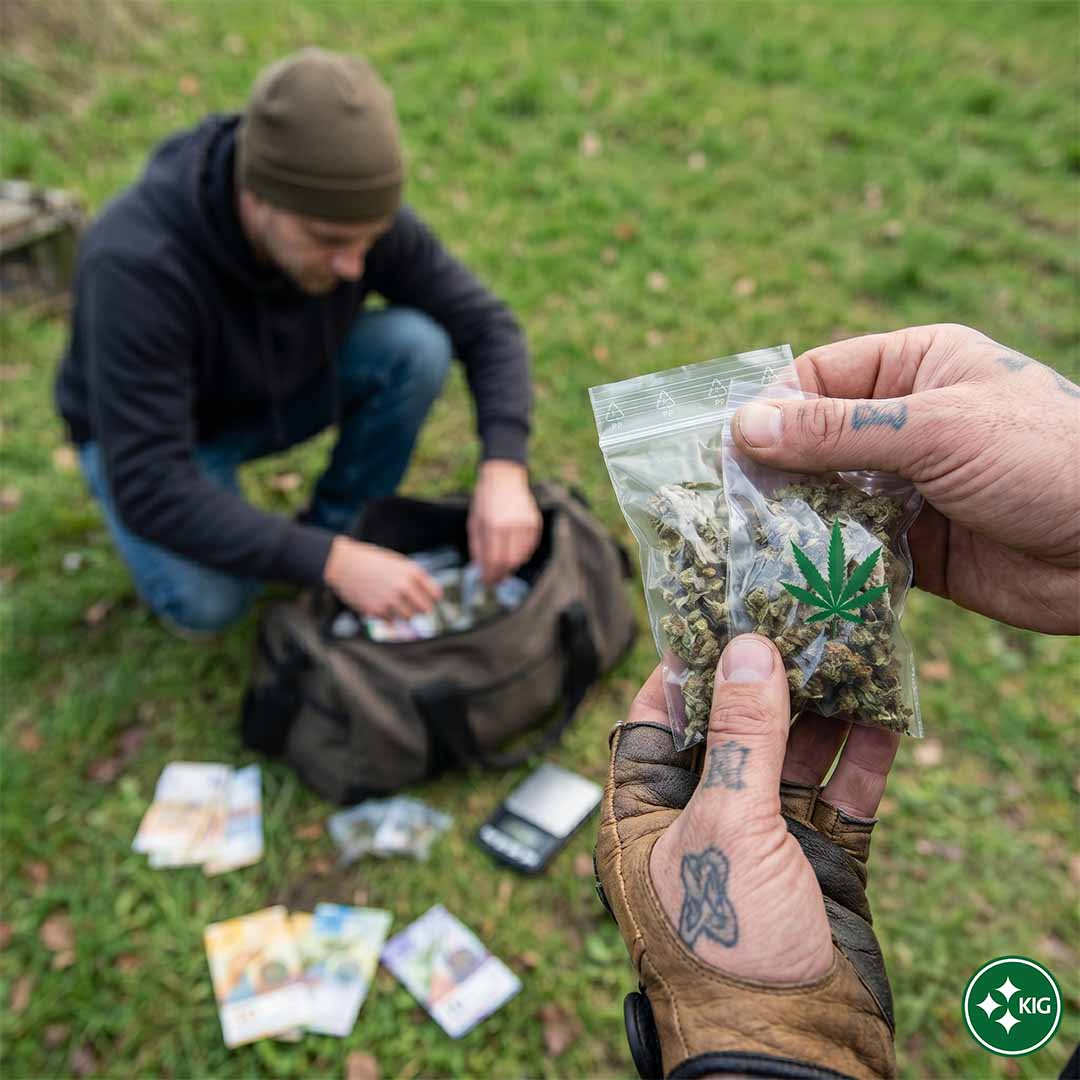
The debate over THC-containing hemp in Switzerland has been informed by new data released in early 2026. A recent study by Addiction Switzerland examines cannabis products available on the black market in the canton of Vaud. At the same time, it compares these products with those from the regulated “Cann-L” pilot project in Lausanne.
The results are clear. Prices, THC content, and product safety vary widely on the street. Therefore, the study does not merely highlight a local problem; it also provides important insights for national cannabis policy and the proposed Cannabis Products Act.
For the political debate, this means one thing above all else: people who buy cannabis products on the black market often don’t know what’s actually in them. This creates a risk that can be likened to Russian roulette.
The street lottery: Prices and THC levels vary widely
The study is a first of its kind and provides, for the first time, reliable data on a topic that is often discussed in emotional terms and exploited for political gain. We consider this work to be extremely valuable and thank Addiction Switzerland for this pioneering effort. It paves the way for further urgently needed scientific research and contributes to a more objective and fact-based discussion.
The findings dispel a number of myths. According to the study, cannabis flowers from the black market contain between 1 and 33 percent THC. For illegal resin—that is, hashish—the range is even wider, from 2 to 61 percent THC.
Prices also vary widely. Prices ranging from 1 to 37 francs per gram have been observed. A particular problem is that a high price does not automatically mean a stronger product. Furthermore, no reliable conclusions about safety can be drawn from this.
For consumers, this creates a real lottery. Paying more doesn’t necessarily guarantee better quality. At the same time, there is a lack of proof of origin, lab results, and clear labeling.
This uncertainty highlights why the political debate over regulated sales in Switzerland remains so important. We provide further context on current developments in our article “Cannabis Legalization in Switzerland 2026: Lessons from Germany and the Road to 2029.”
The dangerous trend with hashish: stronger and cheaper
Another issue is causing concern among experts. Illegal cannabis resin is becoming increasingly potent. At the same time, it often remains cheaper than flower.
According to Addiction Switzerland, flower costs an average of about 10 francs per gram. Hashish, on the other hand, costs about 8 francs per gram. At first glance, this seems attractive. However, that is precisely where the risk lies.
The average THC content of illegal resin is now around 30 percent. As a result, hashish on the black market today is often particularly potent and, at the same time, comparatively inexpensive. This trend aligns with a general development in illegal markets: substances are becoming stronger while prices are falling, as shown by an international analysis of government surveillance data published in the journal BMJ Open: “The temporal relationship between drug supply indicators.”
This can be particularly problematic for younger people or inexperienced users. That’s because highly potent products are harder to gauge. In addition, there is an increased risk of feeling overwhelmed, losing control, and experiencing unwanted psychological reactions.
Synthetic Cannabinoids: When a Joint Becomes a Risk
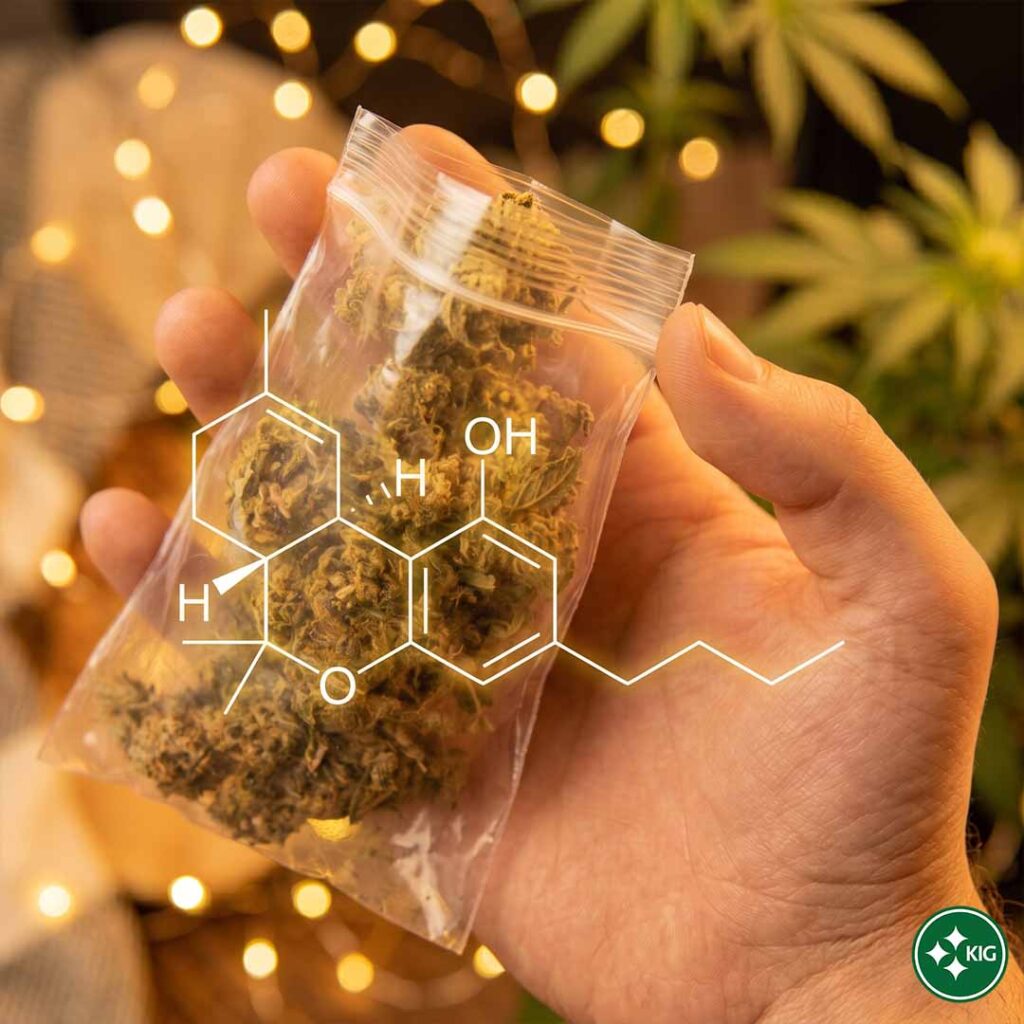
The situation becomes even more dangerous when cannabis products are contaminated or have been treated after harvest. This point does not come directly from the Vaud study, but it is well documented by Swiss prevention agencies.
The black market lacks controls, labeling, and laboratory testing. As a result, adulterated or treated products can enter circulation. Flowers that have been sprayed with synthetic cannabinoids are particularly problematic.
Consumers cannot see these synthetic substances. Their smell and appearance usually do not provide a reliable clue either. That is precisely what makes them so dangerous.
Synthetic cannabinoids can have a significantly stronger effect than natural THC. The consequences range from panic, rapid heartbeat, and loss of consciousness to severe poisoning and death. If you’d like to learn more about this topic, you can find additional information in our article on synthetic cannabinoids.
When buying on the street, there are no labels. No one can be sure whether a product is natural, cut with other substances, or has been chemically treated. As a result, in the worst-case scenario, the next puff on the joint could pose a health risk.
The Cann-L pilot project in Lausanne offers an alternative
The Swiss pilot projects show that there is another way. The “Cann-L” project in Lausanne is exploring regulated, non-profit access to cannabis. The focus is on monitoring, counseling, and risk reduction.
Compared to the black market, the legal model offers several advantages. The products are regulated. In addition, users know the THC content, which allows for targeted use. They also receive guidance from trained staff.
The legal system stands out in particular for:
- Quality control: Products are tested for undesirable substances, among other things.
- Transparency: THC content, price, and product information are clearly stated.
- Risk reduction: Counseling and prevention go hand in hand with dispensing.
- Predictability: Consumers have a better idea of what they are getting.
The results from Cann-L to date also show that a regulated model can significantly weaken the black market. According to Addiction Switzerland, the vast majority of participants have turned away from the illegal market. At the same time, Cann-L has already deprived the black market of at least two million Swiss francs in revenue.
This is an important issue for Switzerland. A regulated market can weaken criminal networks. At the same time, it can reduce health risks and help protect minors without artificially encouraging consumption.
What the study means for Switzerland
The data from the canton of Vaud reveal a clear pattern. The black market offers no reliable guarantees. Prices, active ingredient levels, and product safety vary widely. Furthermore, consumers have little way of knowing what risks a product actually poses.
This is crucial for Swiss cannabis policy. After all, bans alone do not prevent use. Instead, they push it into a market that is virtually impossible to control. As a result, users and young people remain exposed to unnecessary health risks, while the healthcare system faces an additional burden.
Regulated models can offer an alternative approach here. They promote transparency, quality standards, and guidance. At the same time, they provide important data for future policy decisions.
The proposed Cannabis Products Act also moves in this direction. Adults are to be granted access under strict regulations. At the same time, the focus will be on protecting public health, safeguarding minors, and prevention.
Legal CBD Products: Transparency Instead of Guesswork
It is important to make a clear distinction: The study refers to THC-containing cannabis products on the black market. Legal CBD products in Switzerland operate within a different legal framework, provided they comply with applicable regulations.
That is precisely why origin, laboratory analyses, and transparent labeling are so important. Reputable suppliers openly disclose what is in their products. They also prioritize traceable quality over anonymous goods.
At Herba di Berna, we have always been committed to this approach. Our CBD products come from regulated sources and are selected with a focus on Swiss quality, transparency, and responsibility. This fosters trust rather than uncertainty.
Bottom line: Quality, oversight, and transparency instead of Russian roulette
Anyone who wants to avoid risks should therefore pay close attention to origin, quality, and transparency. These are precisely the elements that are lacking in the illegal market.
Another key concern for Philippe Wietlisbach, CEO of Herba di Berna, is the future of the pilot programs. What will happen to the thousands of participants if policymakers are unable to agree on a follow-up plan once the studies are completed? From the management’s perspective, it is crucial that viable solutions be developed in a timely manner. Behind the numbers are people who have committed to participating and, in some cases, have been part of these projects for years. This issue must be discussed early on and in a responsible manner.
One finding of the study that is particularly interesting—yet often receives little attention in public discourse—is that professional harm-reduction counseling helped persuade many participants to adjust their consumption. Some of the participants voluntarily switched to products with lower THC content. Wietlisbach draws a clear conclusion from this: This strongly suggests that education, counseling, and regulated access can be more effective than bans when the goal is safer consumption.
We are not following these pilot studies merely out of professional interest. People from our broader professional network are also participating in these studies. This makes it all the more important to us that the findings be taken seriously and that participants not be left to fend for themselves once the studies are completed.
Discover certified Swiss hemp products at Herba di Berna: CBD flowers, CBD accessories, and CBD cultivation in Switzerland. With us, you know exactly what you’re getting. No guesswork. No black market. And no health risks.
Frequently Asked Questions (FAQ) about cannabis products on the black market
Why do prices for cannabis products on the black market fluctuate so significantly?
Prices fluctuate extremely because there is a complete lack of state regulation and transparent price controls. Supply, demand, and criminal profit margins dictate the market, leading to massive price differences between 1 and 37 francs per gram, according to Addiction Switzerland.
Why are tested items safer than cannabis products on the black market?
Tested specialist products offer full transparency regarding origin, composition, and active ingredient content, which is completely missing in illegal goods. Those who purchase cannabis products on the black market forgo these vital laboratory checks and risk consuming dangerous contaminants.
How strongly do legal pilot projects like Cann-L weaken the trade of cannabis products on the black market?
Official pilot projects show that legal, controlled access noticeably and sustainably curbs the trade of cannabis products on the black market. Through these regulated dispensaries, consumers switch to tested goods, effectively depriving criminal networks of their revenue base.
Why do cannabis products on the black market carry such incalculable health risks?
Buying unregulated goods is like playing Russian roulette because consumers cannot verify the actual ingredients from the outside. In particular, cannabis products on the black market are increasingly laced with dangerous synthetic cannabinoids, which can lead to severe health emergencies and even death.
What impurities are frequently found in hashish and cannabis products on the black market?
Street hashish and other cannabis products on the black market often exhibit extremely high THC levels averaging 30 percent today. In addition, there is a massive health risk from invisible cutting agents and synthetic additives that cannot be detected without professional laboratory testing.
How do legal CBD items differ from cannabis products on the black market?
In stark contrast to the risks associated with cannabis products on the black market, reputable Swiss CBD providers rely on strict laboratory analyses, clear declarations, and transparent origins. Therefore, it is always worthwhile to exclusively trust verified standards and the highest specialist retail quality when buying hemp products.
List of sources
Addiction Switzerland: A study examines cannabis products on the black market in the canton of Vaud
Addiction Switzerland: Pilot project on the non-profit sale of cannabis
SRF: “Strong and cheap”: Black-market cannabis is a lottery
Federal Office of Public Health (FOPH): New Cannabis Products Act
Prevention and Health Promotion, Canton of Zurich: Synthetic cannabinoids and their risks
Saferparty Zurich: Cannabis, adulterants, and drug checking
BMJ Open: The temporal relationship between drug supply indicators