Ordered by 15:00, shipped the same day! Free shipping starting CHF.- 80!


 B2b registration
  Client login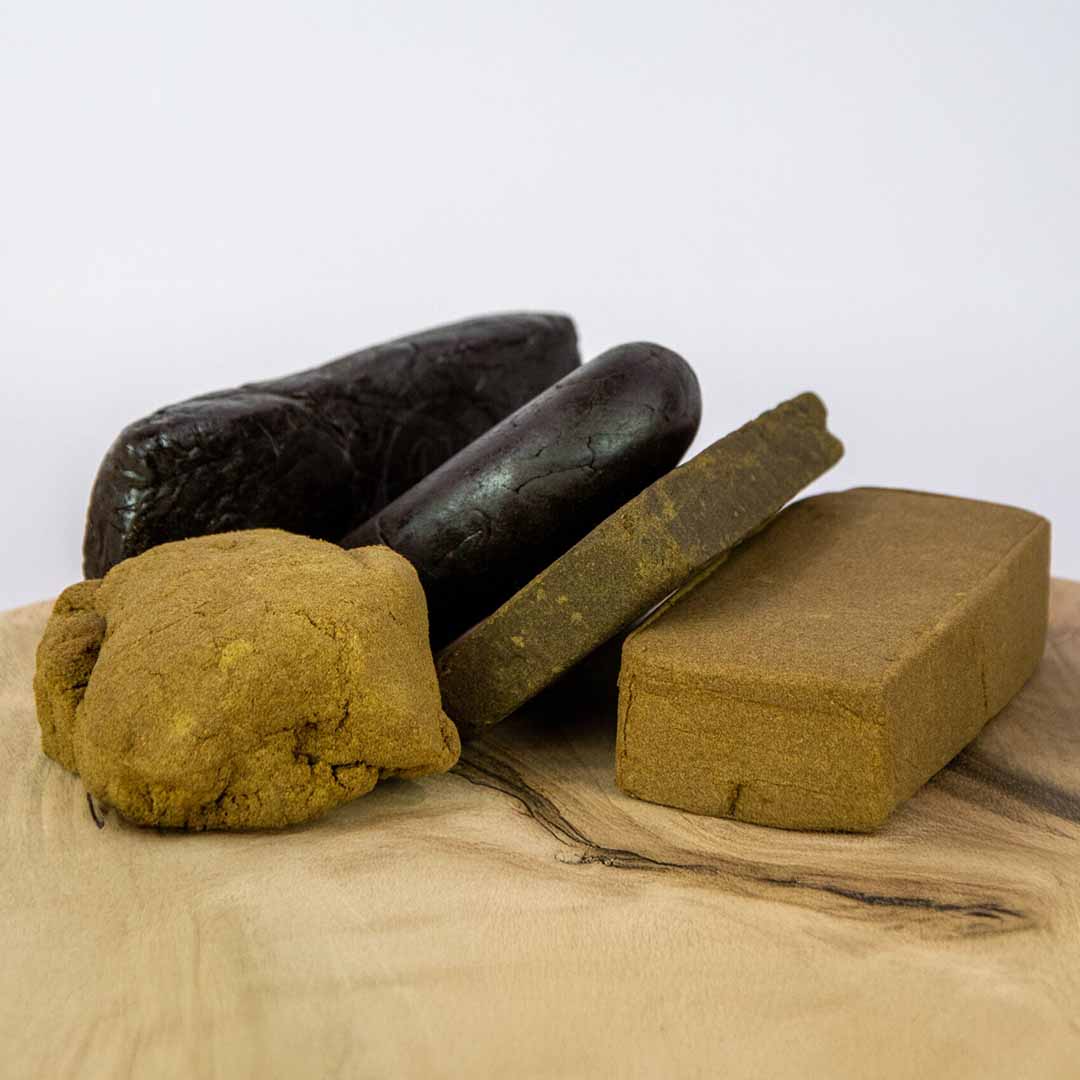
What exactly is hashish? This question comes up frequently because terms like “hash,” “hashish,” “cannabis resin,” “kief,” and “CBD pollen” are often used interchangeably. Simply put, hashish is a concentrated plant product consisting primarily of the resin-containing trichomes of the hemp plant.
These delicate glands are found primarily on the flowers and contain a large proportion of the cannabinoids and terpenes. When the trichomes are separated from the rest of the plant material and processed further, the result is cannabis resin with a consistency that can be firm, soft, creamy, or crumbly, depending on the production method.
In Switzerland, CBD hash made from low-THC hemp is particularly well known. If you’d like to get a quick overview of lab-tested products, you’ll find a variety of textures and flavor profiles in our CBD Hash category, with fast delivery throughout Switzerland.
In a nutshell: What is hash?
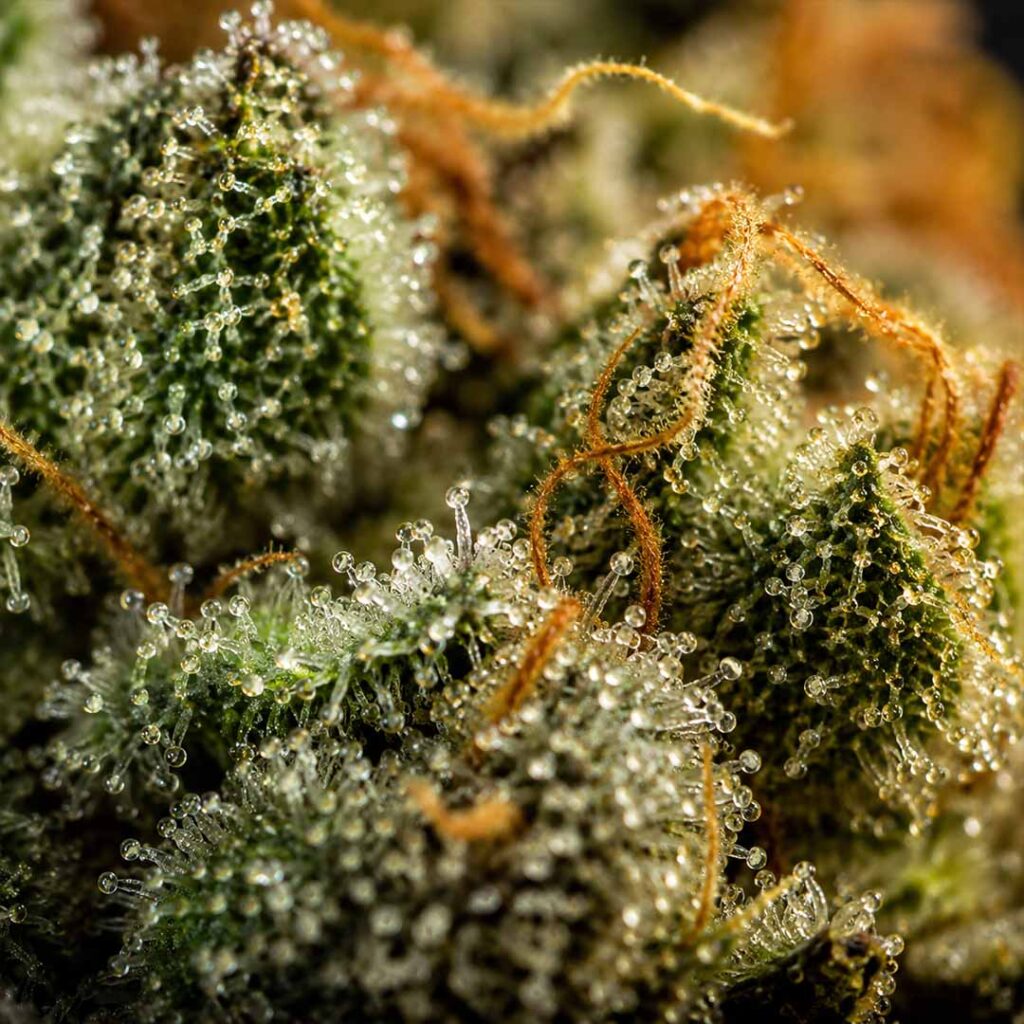
Hash, also known as hashish or cannabis resin, is produced by the resin glands of the cannabis plant. Technically, these glands are referred to as glandular trichomes. Under a microscope, they resemble small, shiny mushrooms with a stem and a spherical cap.
The plant produces and stores various compounds within these structures. These include cannabinoids such as CBD and THC, as well as terpenes, which give a strain its characteristic aroma. Hashish is therefore not just an ordinary piece of pressed flower, but a product with a particularly high concentration of these resinous plant structures.
Which cannabinoids are predominant depends on the genetics used. CBD hash is made from low-THC hemp, while hashish from the illegal market often has a significantly higher THC content. However, appearance or consistency alone do not provide a reliable indication of the actual content. A laboratory analysis is required for that.
What is the difference between CBD hash, CBD flowers, and extracts?
CBD flowers consist of the dried flower material of the hemp plant. They contain trichomes, as well as plant components such as small leaves, fibers, and floral structures. With hashish, on the other hand, a large portion of the plant material is removed, resulting in a higher concentration of trichomes.
Even modern extracts are not automatically hashish. Traditional hashish is produced mainly through the mechanical separation and subsequent processing of resin. Products such as hash oil, wax, or other highly concentrated extracts, on the other hand, are often obtained using technical extraction methods. They therefore constitute a separate product category.
“Kief” usually refers to loose trichome material that has not yet been pressed, or has been only lightly pressed. In the trade, the term “pollen” is sometimes used to describe it. Botanically speaking, however, this is not actual pollen, but primarily detached resin glands and fine plant particles.
How do the trichomes of the hemp plant form?
Trichomes serve several purposes for the plant. Among other things, their compounds can help protect flowers from certain environmental factors and pests. At the same time, these glands play a key role in determining how strong a cannabis strain’s aroma is and what cannabinoid profile it develops.
The highest density of large glandular trichomes is typically found on the female inflorescences. This is precisely why mature flowers serve as the most important source material for high-quality cannabis resin.
Terpenes are responsible for many spicy, earthy, fruity, floral, or citrusy aromas. If you’d like to delve deeper into plant chemistry, you’ll find more information on aroma, strain profiles, and plant biology in the article “Cannabis Terpenes Explained.”
What kinds of hash are there?
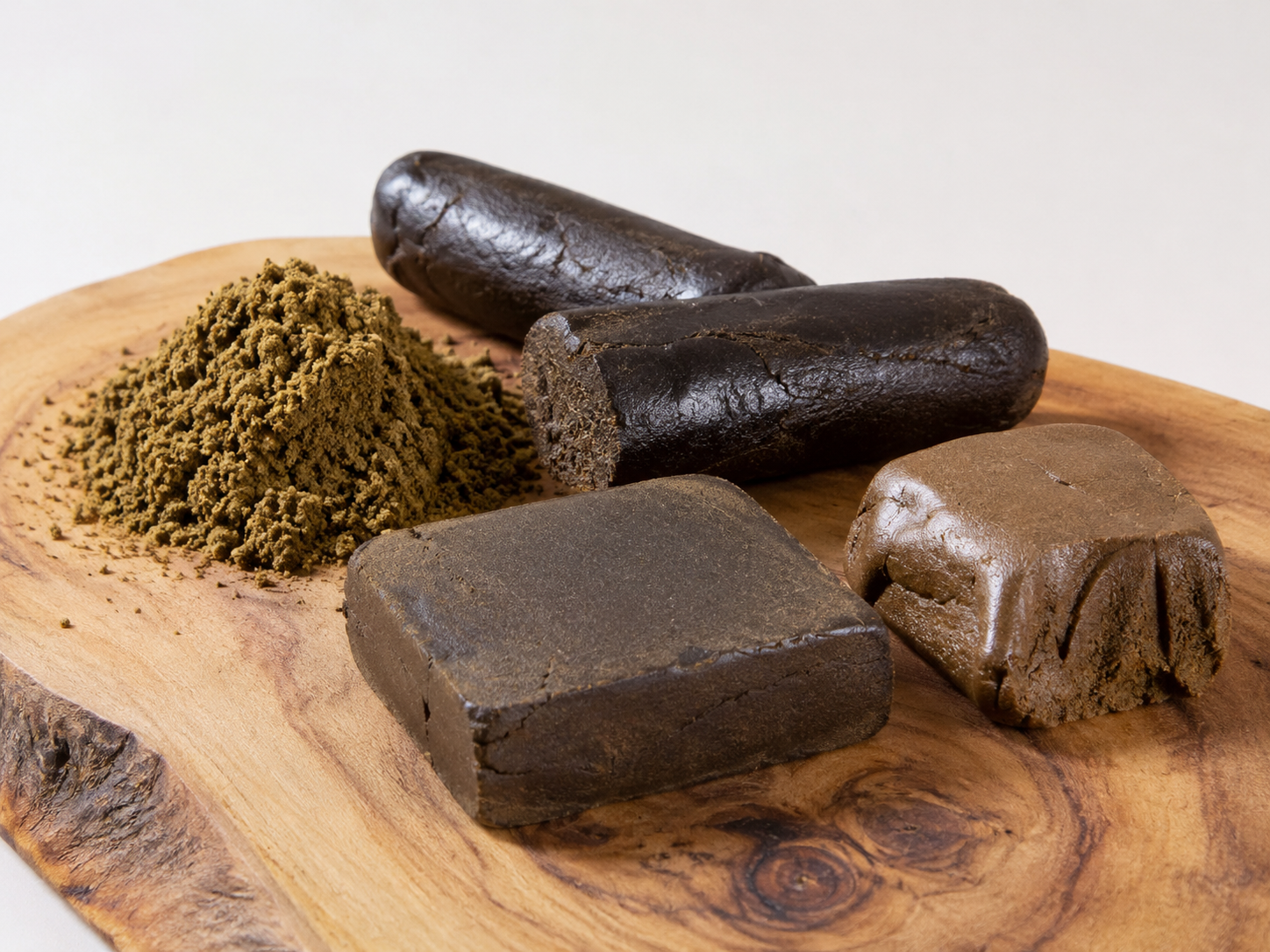
What exactly is hashish, given that its consistency can range from dry and crumbly to soft and creamy? The answer lies in genetics, the raw material, the separation of the trichomes, and further processing. That’s why different types of hashish can look very different.
Sifted and pressed hash
In traditional sieving methods, the trichomes are mechanically separated from the dried plant material. The collected resin can then be pressed. Depending on the fineness of the material, as well as the pressure, temperature, and storage conditions, the resulting texture can be firm, soft, or creamy.
Charas
Charas is a traditional form of cannabis resin from parts of the Indian subcontinent and the Himalayan region. Unlike many sifted products, this resin is extracted from fresh, still-living plants. This often results in a dark color and a soft consistency.
Resin and so-called pollen
Kief consists of loose, trichome-rich material and is not necessarily pressed. As a result, it feels lighter and airier than traditional hash. If kief is compressed and processed, it can be turned into a more compact form of cannabis resin.
Filtered hash
Terms such as “filtered” or “multiple-filtered” usually refer to the separation of particles of different sizes. The goal is to achieve the highest possible proportion of trichomes and a lower proportion of plant material. However, the exact term alone is not proof of quality. Origin, processing, and lab results remain crucial.
We have deliberately chosen not to cover the various production methods in full in this introductory article. You can find a more in-depth overview in the separate post “Making Hash.” This allows this blog to remain focused on the question, “What is hash?”
Putting the History of Hashish into Perspective
The history of the hemp plant goes back a long way. Archaeological finds from the Pamir Mountains show that cannabis was burned in ritual contexts as early as about 2,500 years ago. Such evidence attests to the early use of cannabis, but does not automatically prove the production of hashish in its present form.
Historical references to cannabis resin are found later, particularly in Central Asia, Persia, the Arab world, and the Indian subcontinent. Trade and exchange routes helped spread knowledge about cannabis and its processing among different regions.
Traditions such as Moroccan sieve hash or Indian charas developed under different climatic and cultural conditions. That is why names like Ketama, Charas, or Afghan refer not only to a specific consistency but often also to a historical region or method of production.
Today, cannabis resin is produced in a wide variety of ways around the world. Alongside traditional forms, there are modern, more heavily filtered varieties. For an objective classification, it therefore makes sense to consider origin, method, and product category separately.
Is CBD hash legal in Switzerland?
In Switzerland, hemp with a total THC content of less than 1 percent is not subject to the Narcotics Act. This generally applies to cannabis resin derived from it as well. However, the 1 percent threshold alone does not answer all legal questions.
Depending on the intended use and product classification, additional regulations may apply. For example, the BAG classifies low-THC flowers and resin as tobacco substitute products. Accordingly, the Tobacco Products Act, labeling requirements, youth protection laws, and other regulations may apply.
It is also important to note that the legal THC limit is not an indication of quality or a medical recommendation. Reputable suppliers therefore ensure traceable origins, accurate labeling, and up-to-date laboratory analyses.
At Herba di Berna, you’ll find CBD hash from a curated selection of Swiss products. Our company is based in Bern and reliably ships to every Swiss canton.
How can you tell if CBD hash is high-quality?
Color and texture can provide clues, but they are not sufficient for a reliable assessment. Light-colored hash is not automatically better than dark-colored hash. Similarly, a soft texture may be desirable depending on the method used, or it may result from heat and storage.
Several factors taken together are more meaningful:
Transparency regarding the product’s origin builds trust. Equally important are verifiable lab results for CBD, THC, and other relevant compounds. The aroma should match the genetics used and should not smell musty or noticeably foreign. In addition, the product should be cleanly processed, properly labeled, and free of visible impurities.
Consistency also depends on many factors. The trichome content, residual moisture, temperature, pressure, and storage duration can all alter a product. That’s why hash shouldn’t be judged based solely on a photo or its color.
How should CBD hash be stored?
Light, heat, air, and moisture can alter the aroma and consistency of cannabis resin. Therefore, it is recommended to store it in a cool, dry place away from light, in a suitable, tightly sealed container.
Significant temperature fluctuations should be avoided. At the same time, moisture must not accumulate in the container, as this can affect the quality. The product should also always be kept out of the reach of children and pets.
You can find more practical information in our guide to optimal cannabis storage.
Conclusion: What is hash, and what makes it special?
Hashish is concentrated cannabis resin consisting mainly of the trichomes of the hemp plant. These glands contain cannabinoids and terpenes, which determine the product’s aroma, composition, and character.
At the same time, not all hash is created equal. Sifted, pressed, hand-ground, or filtered varieties differ significantly in terms of production, structure, and plant profile. Kief, extracts, and flowers should also not be equated with traditional cannabis resin.
When it comes to CBD hash in Switzerland, in addition to taste and consistency, the THC content, intended use, labeling, and reliable quality control are particularly important. If you’re looking to discover different varieties, Herba di Berna offers a rotating selection of lab-tested CBD hash with fast shipping from Bern throughout Switzerland.
FAQ: Häufige Fragen rund um Haschisch
Was ist Hasch einfach erklärt?
Hashish is a concentrated product made from the resin-bearing trichomes of the hemp plant. Depending on the production method, the separated resin glands are left loose, processed, or pressed into a solid or soft mass.
Ist Kief dasselbe wie Hasch?
Not quite. Kief is usually a loose mixture of detached trichomes and fine plant matter. Through pressing and further processing, it can be turned into hash.
Ist CBD Hasch in der Schweiz legal?
Cannabis resin with low THC content—less than 1 percent total THC—is generally not subject to the Narcotics Act. However, depending on its intended use, other regulations may apply, such as those regarding the protection of minors, labeling, and product classification.
Was ist der Unterschied zwischen Hasch und CBD Blüten?
CBD flowers consist of the entire dried flower material. Hashish, on the other hand, contains a higher concentration of resin-rich trichomes and significantly less other plant material.
Enthält CBD Hasch THC?
CBD hash may contain small amounts of THC. To ensure that it does not fall under the Narcotics Act in Switzerland, the total THC content must be less than 1 percent. A laboratory analysis provides information about the actual levels.
Wie lange bleibt CBD Hasch haltbar?
Quality depends heavily on storage, raw materials, and processing. When stored in a cool, dry place, protected from light, and tightly sealed, the flavor and texture are generally preserved for longer. If the product has a strong odor, visible mold, or an unknown origin, it should not be used.
List of sources
United Nations Office on Drugs and Crime: Recommended Methods for the Identification and Analysis of Cannabis and
annabis Products
Tanney et al.: Cannabis Glandular Trichomes: A Cellular Metabolite Factory
Ren et al.: The Origins of Cannabis Smoking: Chemical Residue Evidence from the First Millennium BCE in the Pamirs
Federal Office of Public Health: Legislation on Hemp and Cannabis Products